Chief's blanket ca. 1865 Unidentified The six Navajo weavings from the Ernst Collection represent a range of traditional Indigenous designs, adding depth and range to The Mets holdings of Native North American textiles.Weaving is an ancient form of visual expression, and the Indigenous peoples of the Southwest have been producing complex textiles for centuries. Navajo weavings were widely traded—for their aesthetic quality and use value—among neighboring groups, particularly in the Plains region. By the mid-nineteenth century, non-Natives were seeking out blankets and serapes as works of art and souvenirs. They were called "chiefs blankets" by both Native and Euro-Americans due to their high cost and importance. The term "second phase" is used by cultural historians and collectors to refer to weavings with red rectangles made between 1850 and 1880. "Third-phase" blankets are characterized by artful compositions of diamonds or cross formations, and date to between 1860 and 1880.This d
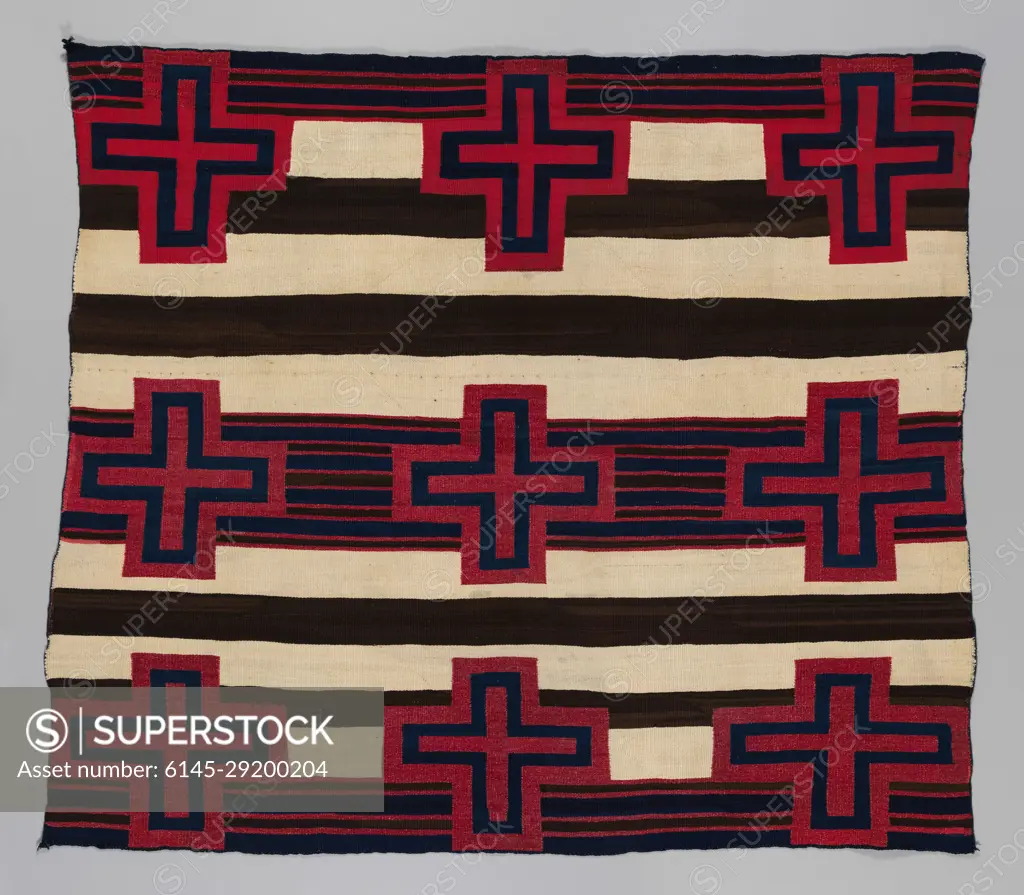
SuperStock offers millions of photos, videos, and stock assets to creatives around the world. This image of Chief's blanket ca. 1865 Unidentified The six Navajo weavings from the Ernst Collection represent a range of traditional Indigenous designs, adding depth and range to The Mets holdings of Native North American textiles.Weaving is an ancient form of visual expression, and the Indigenous peoples of the Southwest have been producing complex textiles for centuries. Navajo weavings were widely traded—for their aesthetic quality and use value—among neighboring groups, particularly in the Plains region. By the mid-nineteenth century, non-Natives were seeking out blankets and serapes as works of art and souvenirs. They were called "chiefs blankets" by both Native and Euro-Americans due to their high cost and importance. The term "second phase" is used by cultural historians and collectors to refer to weavings with red rectangles made between 1850 and 1880. "Third-phase" blankets are characterized by artful compositions of diamonds or cross formations, and date to between 1860 and 1880.This d by Piemags/PL Photography Limited is available for licensing today.
Looking for a license?
Click here, and we'll help you find it! Questions? Just ask!
Click here, and we'll help you find it! Questions? Just ask!
DETAILS
Image Number: 6145-29200204Royalty FreeCredit Line:Piemags/PL Photography Limited/SuperStockCollection:PL Photography Limited Contributor:Piemags Model Release:NoProperty Release:NoResolution:4000×3497