Chessman ca. 3rd-7th century A.D. Sasanian Objects such as this one can present problems of interpretation when they are not preserved as part of a set. This conical ceramic token is identified as a chessman, but it could just as well be a backgammon piece, or some sort of token not related to board games at all. Chess, whose origin is traditionally attributed to India, and backgammon are both attested in Iran by the late Sasanian period. The small town and fortress of Qasr-i Abu Nasr is located near Shiraz in southern Iran at a strategic point at the intersection of defensive mountains, available water sources, and along roads entering the Shiraz plain. The site was excavated by archaeologists from The Metropolitan Museum of Art for three seasons from 1932-1935. The town was occupied, at least intermittently, from the Parthian period (3rd century B.C.-3rd century A.D.) to the Muzaffarid period (13th-14th century A.D.). The major occupation, including the extensive fortress, dates to t
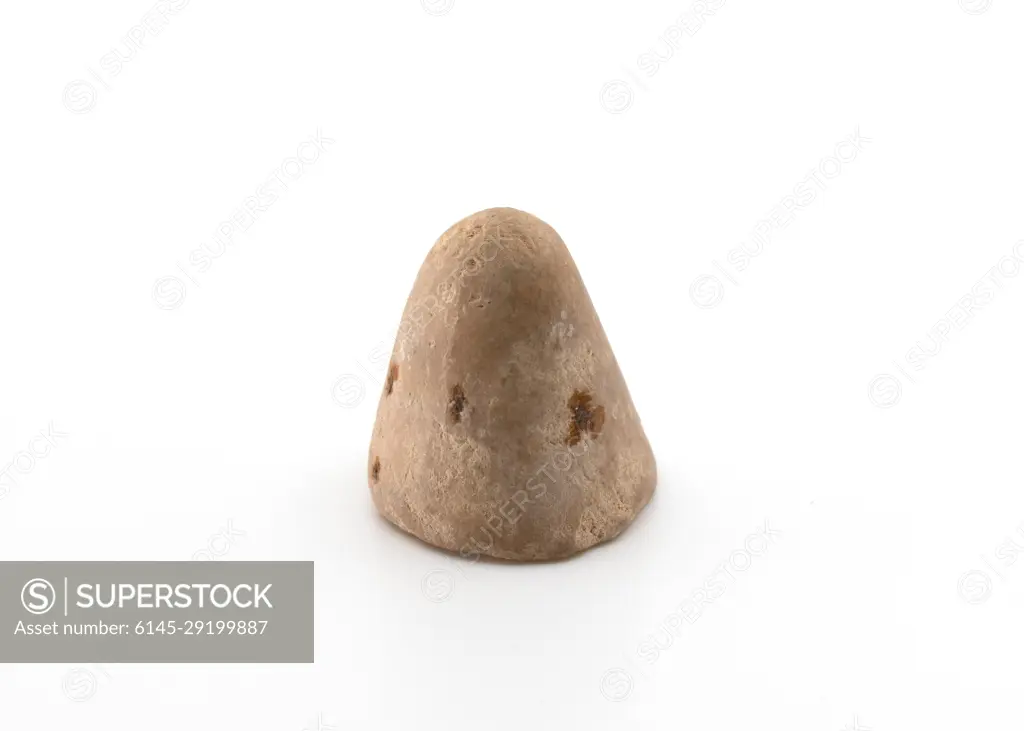
SuperStock offers millions of photos, videos, and stock assets to creatives around the world. This image of Chessman ca. 3rd-7th century A.D. Sasanian Objects such as this one can present problems of interpretation when they are not preserved as part of a set. This conical ceramic token is identified as a chessman, but it could just as well be a backgammon piece, or some sort of token not related to board games at all. Chess, whose origin is traditionally attributed to India, and backgammon are both attested in Iran by the late Sasanian period. The small town and fortress of Qasr-i Abu Nasr is located near Shiraz in southern Iran at a strategic point at the intersection of defensive mountains, available water sources, and along roads entering the Shiraz plain. The site was excavated by archaeologists from The Metropolitan Museum of Art for three seasons from 1932-1935. The town was occupied, at least intermittently, from the Parthian period (3rd century B.C.-3rd century A.D.) to the Muzaffarid period (13th-14th century A.D.). The major occupation, including the extensive fortress, dates to t by Piemags/PL Photography Limited is available for licensing today.
Looking for a license?
Click here, and we'll help you find it! Questions? Just ask!
Click here, and we'll help you find it! Questions? Just ask!
DETAILS
Image Number: 6145-29199887Royalty FreeCredit Line:Piemags/PL Photography Limited/SuperStockCollection:PL Photography Limited Contributor:Piemags Model Release:NoProperty Release:NoResolution:3608×2577