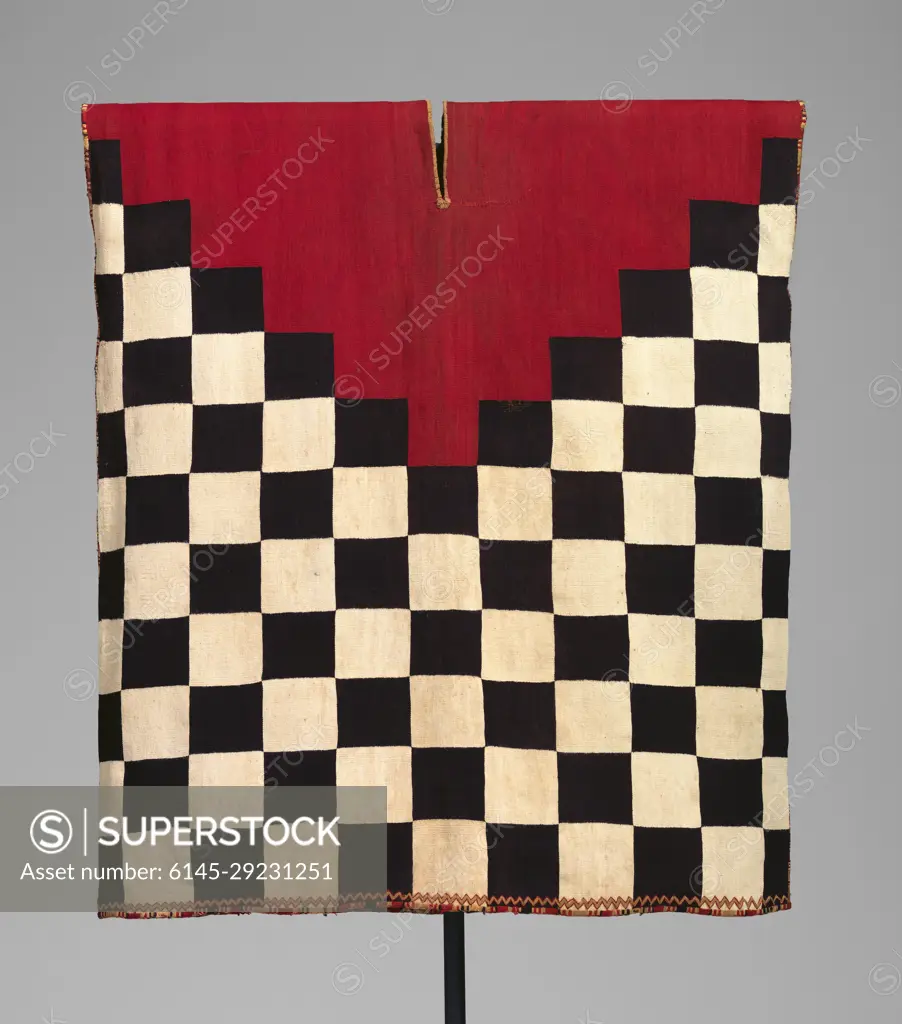
Checkerboard Tunic 16th century Inca This fine tapestry-woven garment features identical black-and-white checkerboard designs on front and back, inside and out, with a red, V-shaped yoke and meticulously embroidered finished edges. Worn by men over a loincloth, such garments were one of the primary markers of identity in the Inca Empire. This type of tunic was first mentioned in 1532 by Francisco de Jerez, secretary to the conquistador Francisco Pizarro. Jerez described the fateful meeting between Atahualpa, the Inca emperor, and Pizarro's small band of men in Cajamarca, Peru, noting that the first regiment of the Inca army wore checkerboard livery.Cloth was of profound importance in Inca culture: no political, military, social, or religious event among the Inca was complete without textiles being exchanged or gifted, burned or sacrificed. Fine tapestry woven tunics would have been bestowed on warriors who distinguished themselves on the battlefield, or given as diplomatic gifts by In
SuperStock offers millions of photos, videos, and stock assets to creatives around the world. This image of Checkerboard Tunic 16th century Inca This fine tapestry-woven garment features identical black-and-white checkerboard designs on front and back, inside and out, with a red, V-shaped yoke and meticulously embroidered finished edges. Worn by men over a loincloth, such garments were one of the primary markers of identity in the Inca Empire. This type of tunic was first mentioned in 1532 by Francisco de Jerez, secretary to the conquistador Francisco Pizarro. Jerez described the fateful meeting between Atahualpa, the Inca emperor, and Pizarro's small band of men in Cajamarca, Peru, noting that the first regiment of the Inca army wore checkerboard livery.Cloth was of profound importance in Inca culture: no political, military, social, or religious event among the Inca was complete without textiles being exchanged or gifted, burned or sacrificed. Fine tapestry woven tunics would have been bestowed on warriors who distinguished themselves on the battlefield, or given as diplomatic gifts by In by Piemags/PL Photography Limited is available for licensing today.
Looking for a license?
Click here, and we'll help you find it! Questions? Just ask!
Click here, and we'll help you find it! Questions? Just ask!
DETAILS
Image Number: 6145-29231251Royalty FreeCredit Line:Piemags/PL Photography Limited/SuperStockCollection:PL Photography Limited Contributor:Piemags Model Release:NoProperty Release:NoResolution:3527×4000