Celt before 16th century Maya () Greenstone axe heads, commonly known as “celts,” were some of the most important works of art across ancient Mesoamerica and Central America. Created from jadeite mined from the Motagua River Valley of southern Guatemala, or using local green stones from highland Mexico, celts were first created by the Olmec peoples of the Gulf Coast after 1000 B.C. The Olmec conceived of green celts as sprouts of maize and thus “planted” celts in dedicatory offerings, activating ceremonial spaces and perpetuating agricultural fertility. For the later Maya peoples, celts also served as dedicatory materials, but more so as adornments for the royal bodies of kings and queens. Often the celts would be thinned into celt-shaped plaques, strung together in pairs and triads in order to create belt assemblages that would have clinked with the sound of jades striking one another. Tombs from the Classic Period (ca. AD 250-900) contain celts of jadeite and various greenstones fro
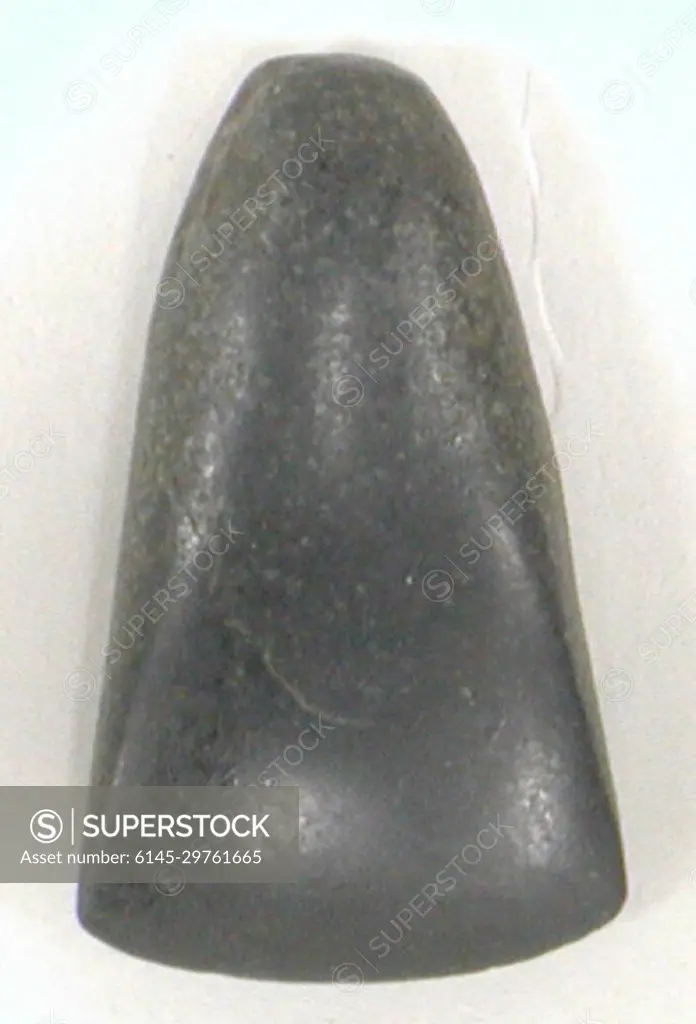
SuperStock offers millions of photos, videos, and stock assets to creatives around the world. This image of Celt before 16th century Maya () Greenstone axe heads, commonly known as “celts,” were some of the most important works of art across ancient Mesoamerica and Central America. Created from jadeite mined from the Motagua River Valley of southern Guatemala, or using local green stones from highland Mexico, celts were first created by the Olmec peoples of the Gulf Coast after 1000 B.C. The Olmec conceived of green celts as sprouts of maize and thus “planted” celts in dedicatory offerings, activating ceremonial spaces and perpetuating agricultural fertility. For the later Maya peoples, celts also served as dedicatory materials, but more so as adornments for the royal bodies of kings and queens. Often the celts would be thinned into celt-shaped plaques, strung together in pairs and triads in order to create belt assemblages that would have clinked with the sound of jades striking one another. Tombs from the Classic Period (ca. AD 250-900) contain celts of jadeite and various greenstones fro by Piemags/PL Photography Limited is available for licensing today.
Looking for a license?
Click here, and we'll help you find it! Questions? Just ask!
Click here, and we'll help you find it! Questions? Just ask!
DETAILS
Image Number: 6145-29761665Royalty FreeCredit Line:Piemags/PL Photography Limited/SuperStockCollection:PL Photography Limited Contributor:Piemags Model Release:NoProperty Release:NoResolution:700×1029