Cécilium. Culture: French. Dimensions: H.: 119.6 cm (47-1/8 in.); W.: 50.1 cm (19-3/4 in.); Bow L.: 32.3 cm (12-3/4 in.). Maker: Arthur Quentin de Gromard (French, Eu, Seine-Maritime, France 1821-1896, Eu, Seine-Maritime). Date: ca. 1880.The cécilium was designed in 1869 by Arthur de Gromard, a scion of an old noble family in Eu, Normandy. It became the signature instrument of the Cécilienne, the local philharmonic society that Gromard founded in 1857. Compared to the melophone, the cécilium's inner construction is more rationalized, and the pumping of the bellows is designed to imitate the bowing of a cello. Gromard sought to create an instrument suited to classical music, not only as a replacement for the cello but as an instrument with a character of its own, with an expressive sound whose beauty reveals itself most when accompanied by a string quartet. Nonetheless, its sound was not powerful enough to meet the demands of a regular orchestral instrument. When Gromard died in 1896,
This asset has restrictions and cannot be purchased online. Get in touch for more details.
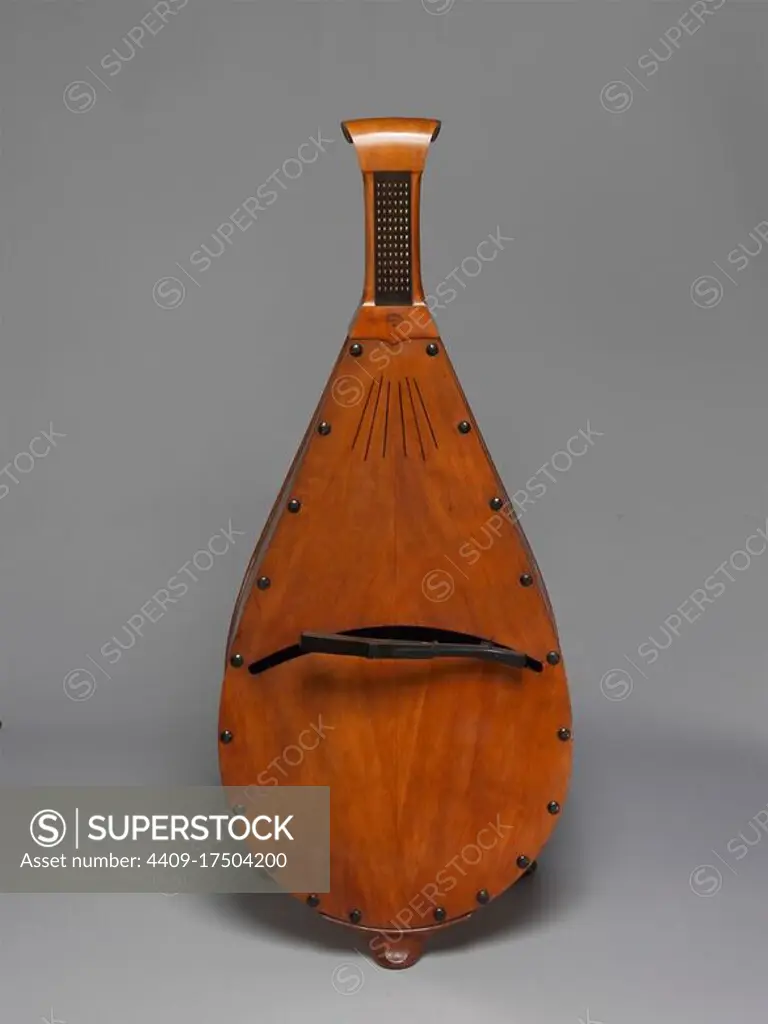
SuperStock offers millions of photos, videos, and stock assets to creatives around the world. This image of Cécilium. Culture: French. Dimensions: H.: 119.6 cm (47-1/8 in.); W.: 50.1 cm (19-3/4 in.); Bow L.: 32.3 cm (12-3/4 in.). Maker: Arthur Quentin de Gromard (French, Eu, Seine-Maritime, France 1821-1896, Eu, Seine-Maritime). Date: ca. 1880.The cécilium was designed in 1869 by Arthur de Gromard, a scion of an old noble family in Eu, Normandy. It became the signature instrument of the Cécilienne, the local philharmonic society that Gromard founded in 1857. Compared to the melophone, the cécilium's inner construction is more rationalized, and the pumping of the bellows is designed to imitate the bowing of a cello. Gromard sought to create an instrument suited to classical music, not only as a replacement for the cello but as an instrument with a character of its own, with an expressive sound whose beauty reveals itself most when accompanied by a string quartet. Nonetheless, its sound was not powerful enough to meet the demands of a regular orchestral instrument. When Gromard died in 1896, by Album/Metropolitan Museum of Art, NY/Album Archivo is available for licensing today.
Looking for a license?
Click here, and we'll help you find it! Questions? Just ask!
Click here, and we'll help you find it! Questions? Just ask!
DETAILS
Image Number: 4409-17504200Rights ManagedCredit Line:Album/Metropolitan Museum of Art, NY/Album Archivo/SuperStockCollection:Album Archivo Contributor:Album / Metropolitan Museum of Art, NY Model Release:NoProperty Release:NoResolution:3150×4200