Carpet with Palm Trees, Ibexes, and Birds late 16th-early 17th century This carpet, with its pictorial depiction of trees, birds, and animals, is conceived like a textile with a repeat design in which each unit reverses the direction of the preceding one. The ibexes, Chinese mythological beasts called qilins, and animals in combat, are derived from Safavid Persian art, as is the border design of cartouches and star-shaped medallions with cloud bands. The palm tree, however, is a very Indian feature, as is the generally naturalistic drawing of the flora and fauna and the bright red color of the field. The relationship to Persian carpet design dates this example to the early Mughal period, soon after the first carpet workshops were established by the emperor Akbar in Lahore, Agra, and Fatehpur Sikri. Listen to experts illuminate this artwork's story Listen Play or pause #6668. Overview: Mughal Carpets, Part 1 Play or pause #6668. Overview: Mughal Carpets Supported by Bloomberg Philanthro
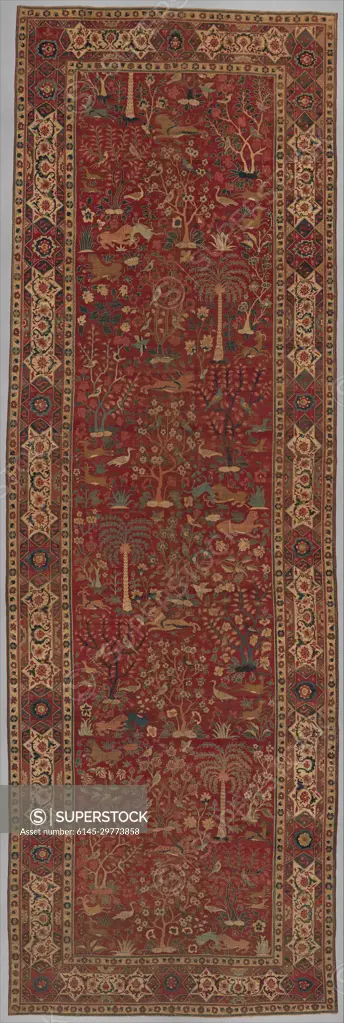
SuperStock offers millions of photos, videos, and stock assets to creatives around the world. This image of Carpet with Palm Trees, Ibexes, and Birds late 16th-early 17th century This carpet, with its pictorial depiction of trees, birds, and animals, is conceived like a textile with a repeat design in which each unit reverses the direction of the preceding one. The ibexes, Chinese mythological beasts called qilins, and animals in combat, are derived from Safavid Persian art, as is the border design of cartouches and star-shaped medallions with cloud bands. The palm tree, however, is a very Indian feature, as is the generally naturalistic drawing of the flora and fauna and the bright red color of the field. The relationship to Persian carpet design dates this example to the early Mughal period, soon after the first carpet workshops were established by the emperor Akbar in Lahore, Agra, and Fatehpur Sikri. Listen to experts illuminate this artwork's story Listen Play or pause #6668. Overview: Mughal Carpets, Part 1 Play or pause #6668. Overview: Mughal Carpets Supported by Bloomberg Philanthro by Piemags/PL Photography Limited is available for licensing today.
Looking for a license?
Click here, and we'll help you find it! Questions? Just ask!
Click here, and we'll help you find it! Questions? Just ask!
DETAILS
Image Number: 6145-29773858Royalty FreeCredit Line:Piemags/PL Photography Limited/SuperStockCollection:PL Photography Limited Contributor:Piemags Model Release:NoProperty Release:NoResolution:1336×3971