Carpet late 16th-early 17th century While the design of this carpet, with its central medallion and defined corner pieces, resembles that of a number of silk pile carpets from the second half of the sixteenth century, its precious metal thread and tapestry-weave technique are typical of luxury products from a half century later. The carnation blossoms that appear in the border were widespread in Ottoman ceramics and textiles in the sixteenth century and became popular in Safavid textile designs from the 1640s onward.The silk weft threads of this carpet vary in quality and diameter and range from loosely spun to tightly plied. The upper and lower borders feature an almost identical pattern but are differentiated by contrasting colors of blue and yellow, possibly intended to mark the top of the carpet.. Carpet. late 16th-early 17th century. Silk, metal wrapped thread; tapestry weave. Attributed to Iran, probably Kashan. Textiles-Rugs
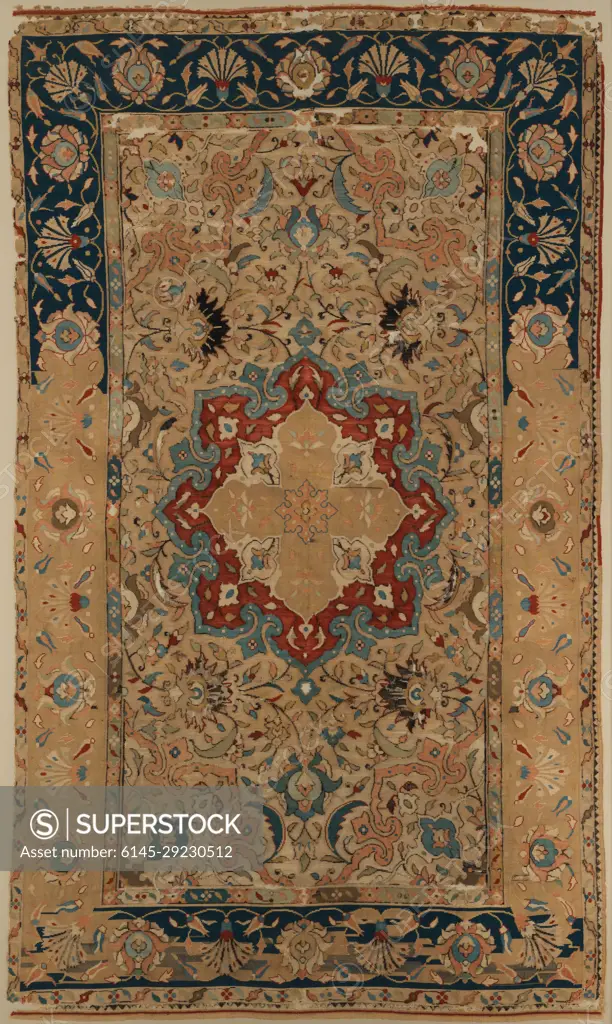
SuperStock offers millions of photos, videos, and stock assets to creatives around the world. This image of Carpet late 16th-early 17th century While the design of this carpet, with its central medallion and defined corner pieces, resembles that of a number of silk pile carpets from the second half of the sixteenth century, its precious metal thread and tapestry-weave technique are typical of luxury products from a half century later. The carnation blossoms that appear in the border were widespread in Ottoman ceramics and textiles in the sixteenth century and became popular in Safavid textile designs from the 1640s onward.The silk weft threads of this carpet vary in quality and diameter and range from loosely spun to tightly plied. The upper and lower borders feature an almost identical pattern but are differentiated by contrasting colors of blue and yellow, possibly intended to mark the top of the carpet.. Carpet. late 16th-early 17th century. Silk, metal wrapped thread; tapestry weave. Attributed to Iran, probably Kashan. Textiles-Rugs by Piemags/PL Photography Limited is available for licensing today.
Looking for a license?
Click here, and we'll help you find it! Questions? Just ask!
Click here, and we'll help you find it! Questions? Just ask!
DETAILS
Image Number: 6145-29230512Royalty FreeCredit Line:Piemags/PL Photography Limited/SuperStockCollection:PL Photography Limited Contributor:Piemags Model Release:NoProperty Release:NoResolution:2391×4000