Carpet late 15th-early 16th century Documents first refer to Cairo as a carpetweaving center in the last quarter of the fifteenth century. Carpets of this type figured significantly in Mediterranean commerce and appear in Venetian paintings as early as the sixteenth century. They are characterized by kaleidoscopic profusion of tiny motifs and a limited color range, resulting in an iridescent effect. Production of these socalled Mamluk carpets continued until the mid-sixteenth century, after the 1517 Ottoman conquest of Egypt. Listen to experts illuminate this artwork's story Listen Play or pause #6638. Overview: Mamluk Carpets, Part 1 Play or pause #6639. Overview: Mamluk Carpets, Part 2 Supported by Bloomberg Philanthropies We're sorry, the transcript for this audio track is not available at this time. We are working to make it available as soon as possible.. Carpet 450467
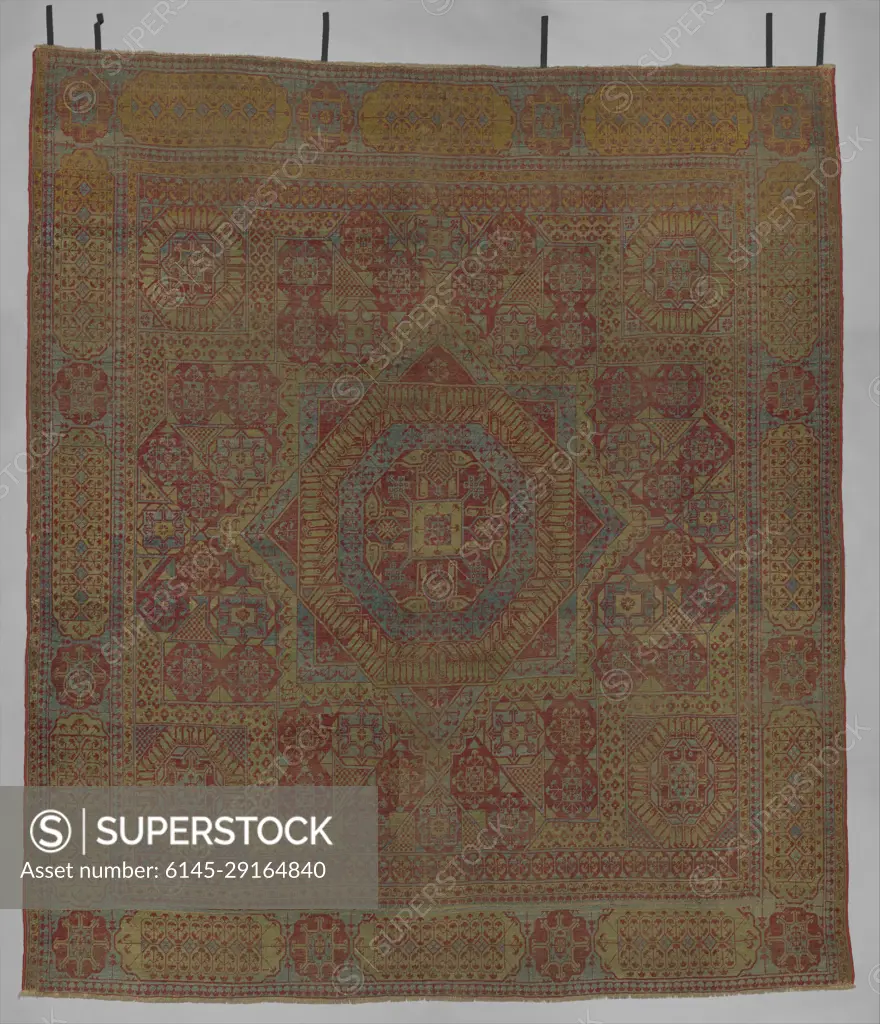
SuperStock offers millions of photos, videos, and stock assets to creatives around the world. This image of Carpet late 15th-early 16th century Documents first refer to Cairo as a carpetweaving center in the last quarter of the fifteenth century. Carpets of this type figured significantly in Mediterranean commerce and appear in Venetian paintings as early as the sixteenth century. They are characterized by kaleidoscopic profusion of tiny motifs and a limited color range, resulting in an iridescent effect. Production of these socalled Mamluk carpets continued until the mid-sixteenth century, after the 1517 Ottoman conquest of Egypt. Listen to experts illuminate this artwork's story Listen Play or pause #6638. Overview: Mamluk Carpets, Part 1 Play or pause #6639. Overview: Mamluk Carpets, Part 2 Supported by Bloomberg Philanthropies We're sorry, the transcript for this audio track is not available at this time. We are working to make it available as soon as possible.. Carpet 450467 by Piemags/PL Photography Limited is available for licensing today.
Looking for a license?
Click here, and we'll help you find it! Questions? Just ask!
Click here, and we'll help you find it! Questions? Just ask!
DETAILS
Image Number: 6145-29164840Royalty FreeCredit Line:Piemags/PL Photography Limited/SuperStockCollection:PL Photography Limited Contributor:Piemags Model Release:NoProperty Release:NoResolution:3377×3926