Camel mid-to-late 6th century China This camel, bearing wooden slats supporting a saddle over its two humps and awaiting a rider, was created for a tomb. The function of mingqi or "spirit utensils" in the tombs of the Northern Wei (386-534), the Eastern Wei (534-550), and the Northern Qi (550-77) dynasties remained essentially the same since their popularization in the Han dynasty (206 B.C.-220 A.D.): to serve the deceased in the afterlife. Large numbers of tomb figurines were common in burials of the northern dynasties and were probably manufactured from molds in large workshops and purchased by families preparing for burials.While some defining characteristics, such as the gaping nostrils, curving lips, and large, flat hooves, are loyally reproduced, the two-dimensional emphasis on the profile, the smooth surface with minimal depiction of hair, and the curvature of the neck give the beast an appearance that is undulating rather than stately. Camels began appearing in tombs by the thi
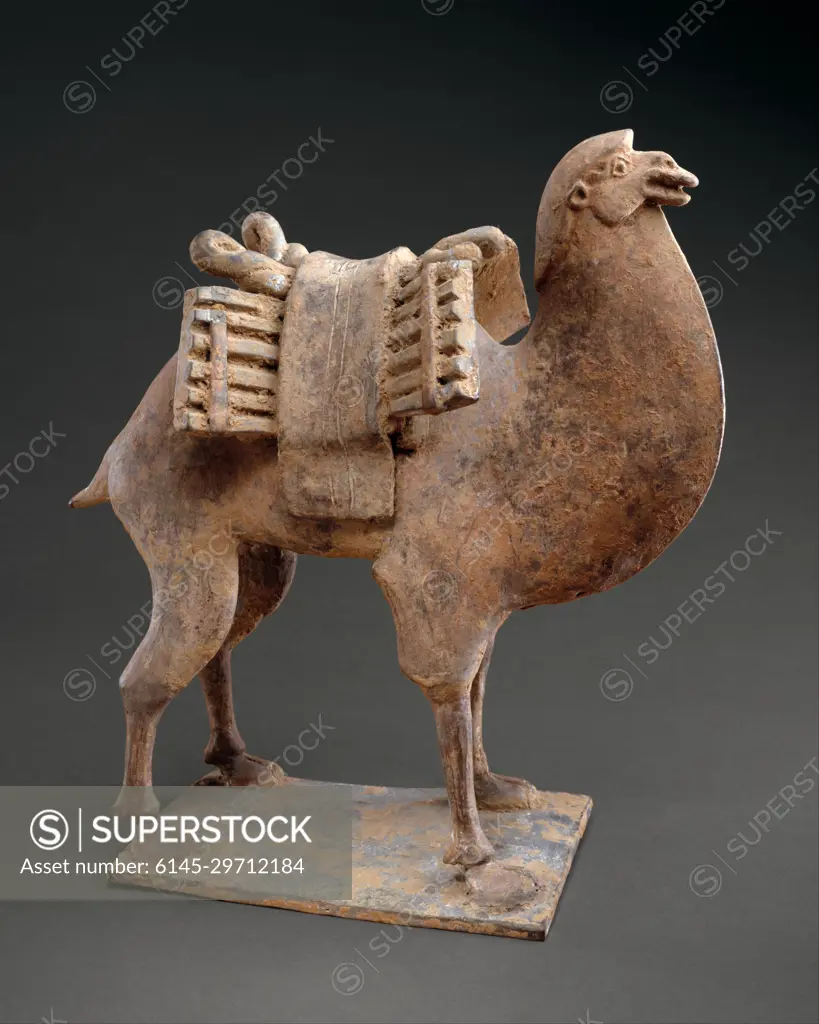
SuperStock offers millions of photos, videos, and stock assets to creatives around the world. This image of Camel mid-to-late 6th century China This camel, bearing wooden slats supporting a saddle over its two humps and awaiting a rider, was created for a tomb. The function of mingqi or "spirit utensils" in the tombs of the Northern Wei (386-534), the Eastern Wei (534-550), and the Northern Qi (550-77) dynasties remained essentially the same since their popularization in the Han dynasty (206 B.C.-220 A.D.): to serve the deceased in the afterlife. Large numbers of tomb figurines were common in burials of the northern dynasties and were probably manufactured from molds in large workshops and purchased by families preparing for burials.While some defining characteristics, such as the gaping nostrils, curving lips, and large, flat hooves, are loyally reproduced, the two-dimensional emphasis on the profile, the smooth surface with minimal depiction of hair, and the curvature of the neck give the beast an appearance that is undulating rather than stately. Camels began appearing in tombs by the thi by Piemags/PL Photography Limited is available for licensing today.
Looking for a license?
Click here, and we'll help you find it! Questions? Just ask!
Click here, and we'll help you find it! Questions? Just ask!
DETAILS
Image Number: 6145-29712184Royalty FreeCredit Line:Piemags/PL Photography Limited/SuperStockCollection:PL Photography Limited Contributor:Piemags Model Release:NoProperty Release:NoResolution:1600×2000