Camel with Dionysian imagery on its saddle bags late 6th-7th century China This pottery model of a Bactrian camel may be a rare example of a Chinese-style tomb figure produced in eastern Central Asia. The identity of the central figure on the packboards is uncertain. He may represent the Indian Kubera, king of the yakshas, who is portrayed in drinking scenes being waited on by women. However, the full beard and absence of headgear are unusual in depictions of Kubera. Another interpretation of the scene is that the three figures were inspired by representations of the Descent from the Cross, an important theme in early Christian iconography that may have been transmitted along the Silk Road.. Camel with Dionysian imagery on its saddle bags. China. late 6th-7th century. Earthenware with appliqué relief decoration and pigment. Sui dynasty (581-618). Ceramics
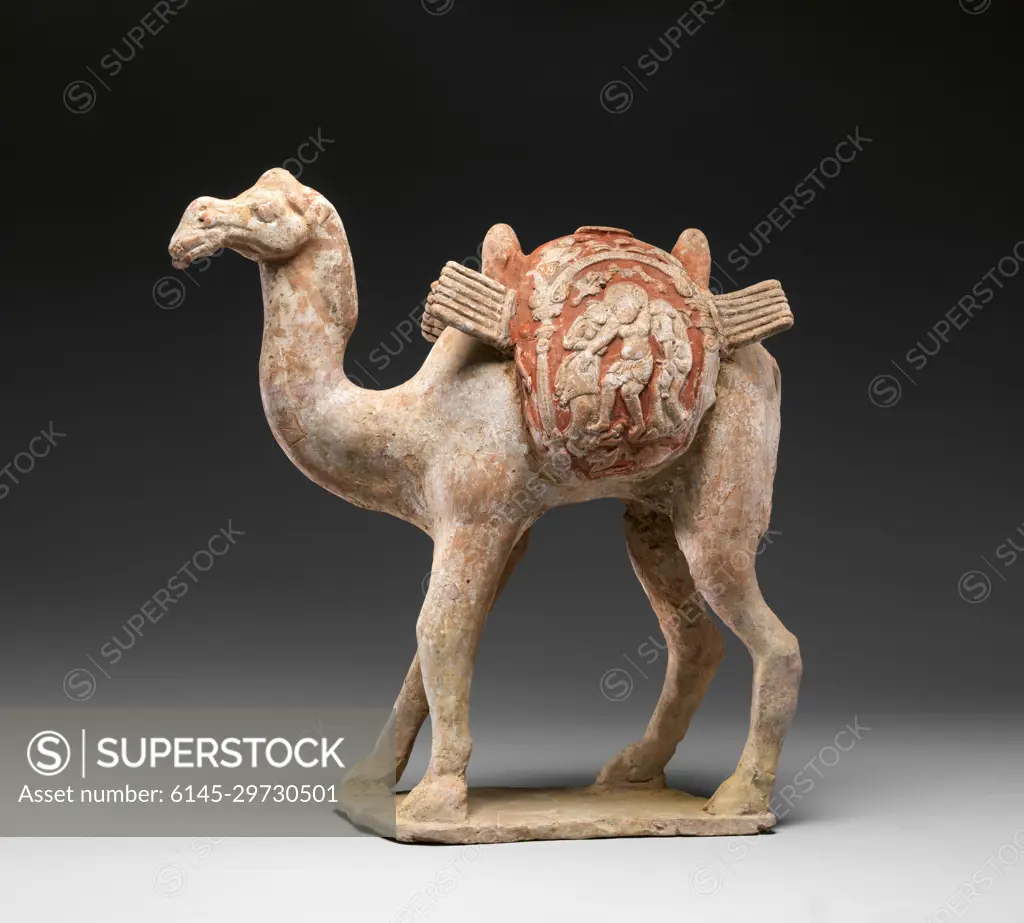
SuperStock offers millions of photos, videos, and stock assets to creatives around the world. This image of Camel with Dionysian imagery on its saddle bags late 6th-7th century China This pottery model of a Bactrian camel may be a rare example of a Chinese-style tomb figure produced in eastern Central Asia. The identity of the central figure on the packboards is uncertain. He may represent the Indian Kubera, king of the yakshas, who is portrayed in drinking scenes being waited on by women. However, the full beard and absence of headgear are unusual in depictions of Kubera. Another interpretation of the scene is that the three figures were inspired by representations of the Descent from the Cross, an important theme in early Christian iconography that may have been transmitted along the Silk Road.. Camel with Dionysian imagery on its saddle bags. China. late 6th-7th century. Earthenware with appliqué relief decoration and pigment. Sui dynasty (581-618). Ceramics by Piemags/PL Photography Limited is available for licensing today.
Looking for a license?
Click here, and we'll help you find it! Questions? Just ask!
Click here, and we'll help you find it! Questions? Just ask!
DETAILS
Image Number: 6145-29730501Royalty FreeCredit Line:Piemags/PL Photography Limited/SuperStockCollection:PL Photography Limited Contributor:Piemags Model Release:NoProperty Release:NoResolution:4000×3606