Bust of John Locke 1765-75 American The placement of busts of learned men in libraries is a tradition that dates from antiquity and proliferated in eighteenth-century Philadelphia. The likeness of the English philosopher John Locke (1632-1704) was a preferred subject that often ornamented the pediment tops of desks and bookcases. This example has a distinct naturalism in the sculpting of the philosophers features that may have been inspired by well-known prints. Americans esteemed Locke for his philosophies that endorsed individual conscience, religious tolerance, and the defense of democracy. Lockes theories were fundamental to the thinking of American Revolutionaries, especially the authors of the Declaration of Independence.. Bust of John Locke. American. 1765-75. Mahogany. Made in Philadelphia, Pennsylvania, United States
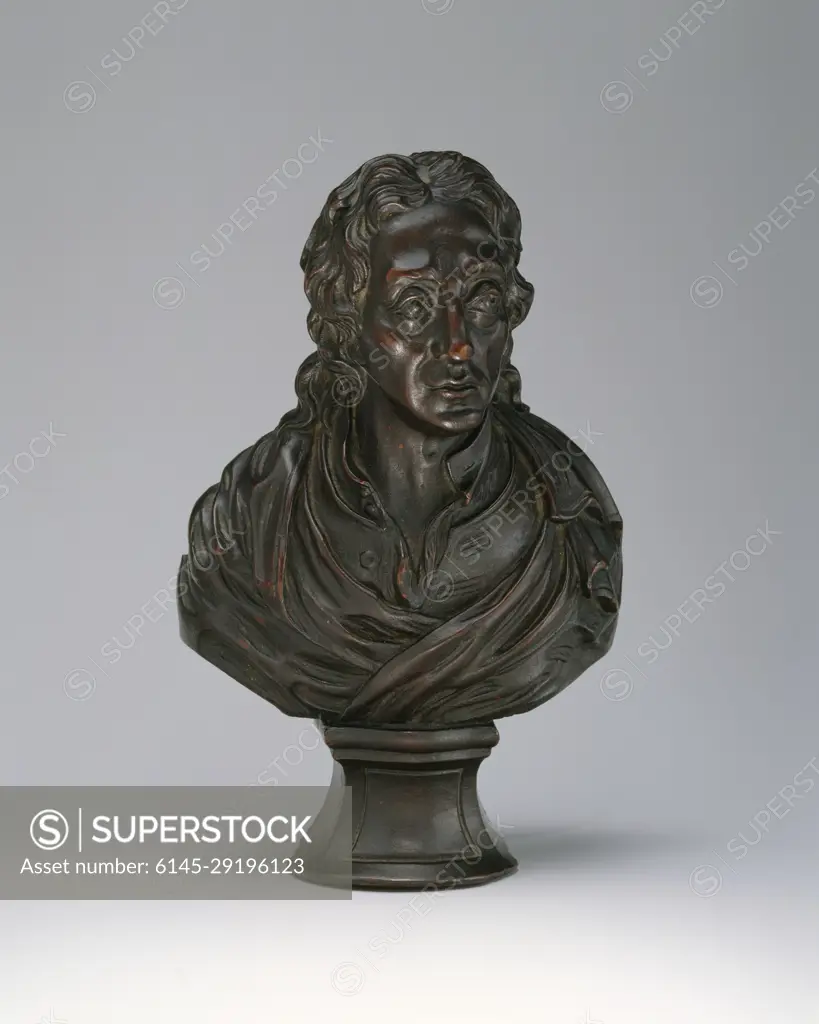
SuperStock offers millions of photos, videos, and stock assets to creatives around the world. This image of Bust of John Locke 1765-75 American The placement of busts of learned men in libraries is a tradition that dates from antiquity and proliferated in eighteenth-century Philadelphia. The likeness of the English philosopher John Locke (1632-1704) was a preferred subject that often ornamented the pediment tops of desks and bookcases. This example has a distinct naturalism in the sculpting of the philosophers features that may have been inspired by well-known prints. Americans esteemed Locke for his philosophies that endorsed individual conscience, religious tolerance, and the defense of democracy. Lockes theories were fundamental to the thinking of American Revolutionaries, especially the authors of the Declaration of Independence.. Bust of John Locke. American. 1765-75. Mahogany. Made in Philadelphia, Pennsylvania, United States by Piemags/PL Photography Limited is available for licensing today.
Looking for a license?
Click here, and we'll help you find it! Questions? Just ask!
Click here, and we'll help you find it! Questions? Just ask!
DETAILS
Image Number: 6145-29196123Royalty FreeCredit Line:Piemags/PL Photography Limited/SuperStockCollection:PL Photography Limited Contributor:Piemags Model Release:NoProperty Release:NoResolution:3200×4000