In Buddhism, a bodhisattva is either an enlightened (bodhi) existence (sattva) or an enlightenment-being or, given the variant Sanskrit spelling satva rather than sattva, 'heroic-minded one (satva) for enlightenment (bodhi).' Another term is 'wisdom-being.' It is anyone who, motivated by great compassion, has generated bodhicitta, which is a spontaneous wish to attain Buddhahood for the benefit of all sentient beings. The Mogao Caves, or Mogao Grottoes (Chinese: mògao ku, also known as the Caves of the Thousand Buddhas and Dunhuang Caves) form a system of 492 temples 25 km (15.5 miles) southeast of the center of Dunhuang, an oasis strategically located at a religious and cultural crossroads on the Silk Road, in Gansu province, China. The caves contain some of the finest examples of Buddhist art spanning a period of 1,000 years. The first caves were dug out in 366 CE as places of Buddhist meditation and worship. The Mogao Caves are the best known of the Chinese Buddhist grottoes and, a
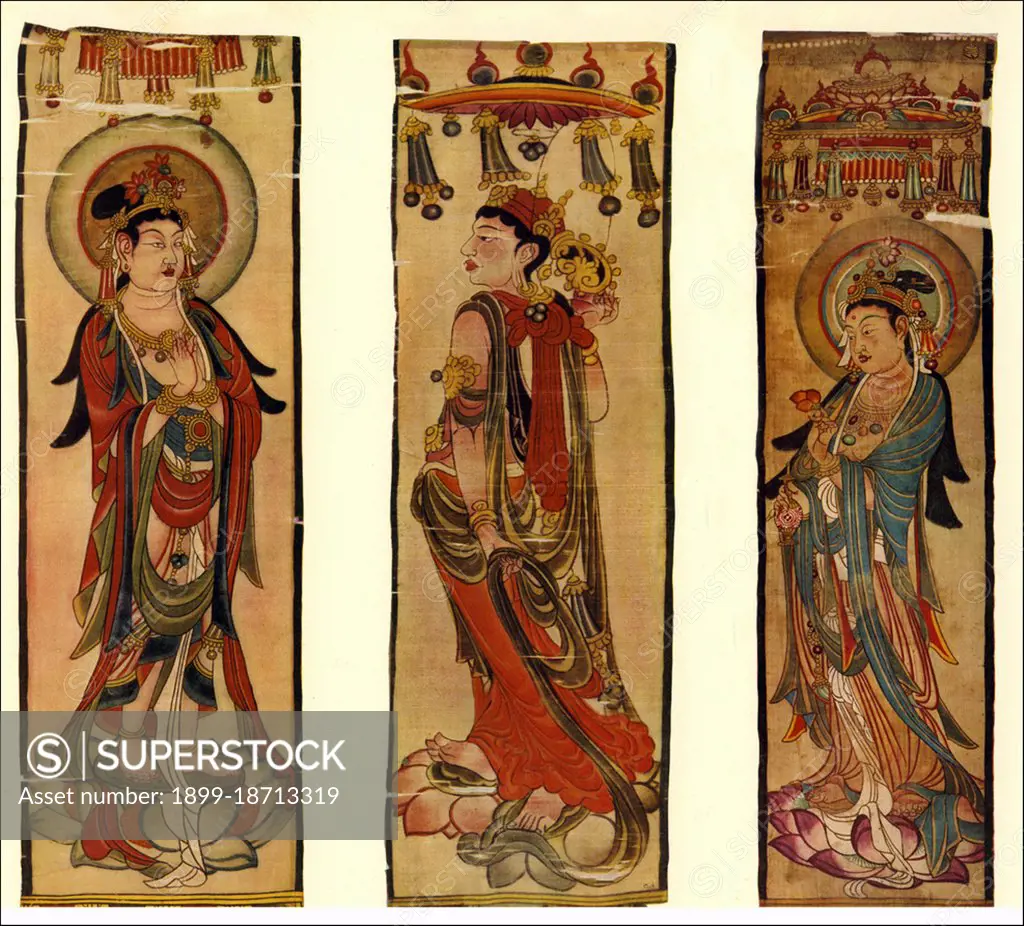
SuperStock offers millions of photos, videos, and stock assets to creatives around the world. This image of In Buddhism, a bodhisattva is either an enlightened (bodhi) existence (sattva) or an enlightenment-being or, given the variant Sanskrit spelling satva rather than sattva, 'heroic-minded one (satva) for enlightenment (bodhi).' Another term is 'wisdom-being.' It is anyone who, motivated by great compassion, has generated bodhicitta, which is a spontaneous wish to attain Buddhahood for the benefit of all sentient beings. The Mogao Caves, or Mogao Grottoes (Chinese: mògao ku, also known as the Caves of the Thousand Buddhas and Dunhuang Caves) form a system of 492 temples 25 km (15.5 miles) southeast of the center of Dunhuang, an oasis strategically located at a religious and cultural crossroads on the Silk Road, in Gansu province, China. The caves contain some of the finest examples of Buddhist art spanning a period of 1,000 years. The first caves were dug out in 366 CE as places of Buddhist meditation and worship. The Mogao Caves are the best known of the Chinese Buddhist grottoes and, a by Pictures From History/Universal Images is available for licensing today.
Looking for a license?
Click here, and we'll help you find it! Questions? Just ask!
Click here, and we'll help you find it! Questions? Just ask!
DETAILS
Image Number: 1899-18713319Rights ManagedCredit Line:Pictures From History/Universal Images/SuperStockCollection:Universal Images Contributor:Pictures From History Model Release:NoProperty Release:NoResolution:4409×3989