Bridleless Curb Bit late 16th - first half 17th century German According to contemporary equestrian manuals, the mouthpiece of this bit was designed for a horse with a thick tongue and an insipid mouth (meaning that the horse does not taste’ its bit, so by rolling the rings on its bars, the toothless part of its mouth, it will make the horse salivate). The curious system at the back of the cheekpieces, connected to the bosses, was used for pinching the upper lip between the tab and the back of the purchase, allowing this bit to be used without the need of a headstall to hanging it. These rare bridleless curb bits, described in some equestrian manuals written in the second half of the 16th century, were certainly somewhat experimental, and only used in non-military contexts. They seem to have been invented, and probably mostly used, in Germany.. Bridleless Curb Bit. German. late 16th - first half 17th century. Iron alloy. Equestrian Equipment-Bits
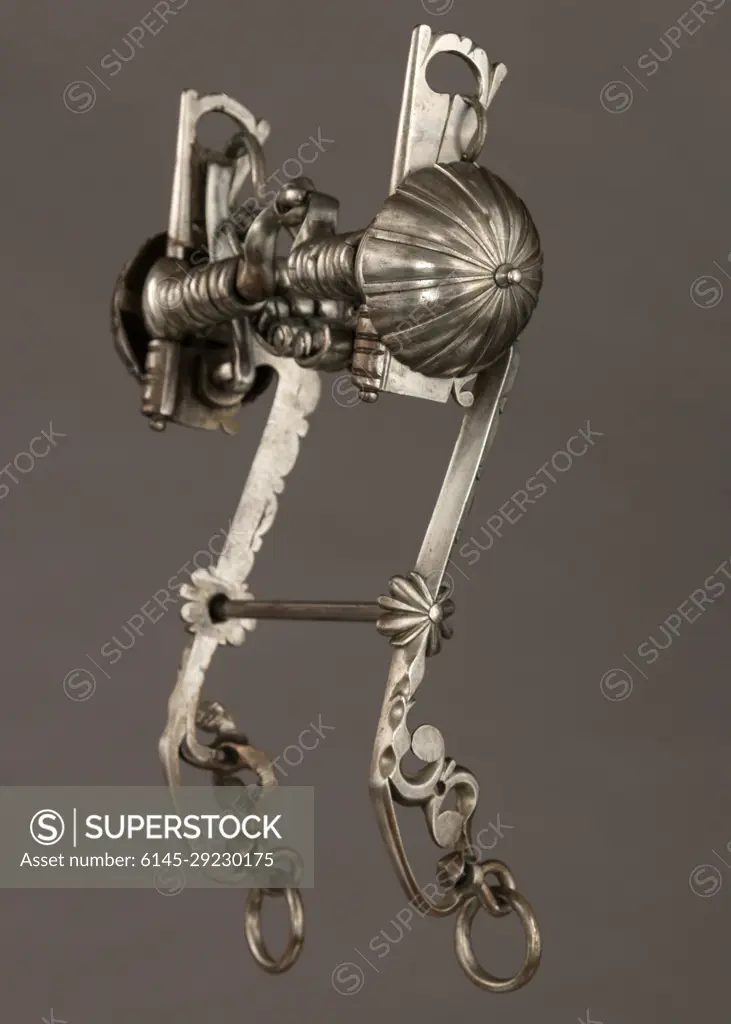
SuperStock offers millions of photos, videos, and stock assets to creatives around the world. This image of Bridleless Curb Bit late 16th - first half 17th century German According to contemporary equestrian manuals, the mouthpiece of this bit was designed for a horse with a thick tongue and an insipid mouth (meaning that the horse does not taste’ its bit, so by rolling the rings on its bars, the toothless part of its mouth, it will make the horse salivate). The curious system at the back of the cheekpieces, connected to the bosses, was used for pinching the upper lip between the tab and the back of the purchase, allowing this bit to be used without the need of a headstall to hanging it. These rare bridleless curb bits, described in some equestrian manuals written in the second half of the 16th century, were certainly somewhat experimental, and only used in non-military contexts. They seem to have been invented, and probably mostly used, in Germany.. Bridleless Curb Bit. German. late 16th - first half 17th century. Iron alloy. Equestrian Equipment-Bits by Piemags/PL Photography Limited is available for licensing today.
Looking for a license?
Click here, and we'll help you find it! Questions? Just ask!
Click here, and we'll help you find it! Questions? Just ask!
DETAILS
Image Number: 6145-29230175Royalty FreeCredit Line:Piemags/PL Photography Limited/SuperStockCollection:PL Photography Limited Contributor:Piemags Model Release:NoProperty Release:NoResolution:2857×4000