Box. Culture: Italian. Dimensions: Overall: 3 9/16 x 2 7/8 x 2 3/4 in. (9 x 7.3 x 7 cm). Date: 15th century.Ink containers of different shapes and sizes frequently appear in manuscript illuminations and in paintings depicting scribes or scholars in their studies. Although it is difficult to determine their material from the pictorial evidence, ink containers are known to have been made not only of horn, but also of silver, tin, and leather, and, in later periods, of glass and stoneware. Horn was used early in the Middle Ages; a twelfth-century manuscript shows two containers made of ox horns set in holes in the scribe's desk. By the fifteenth century, however, ink pots were designed as free-standing containers. Twelfth-century recipes for ink indicate that pigments, made of lampblack, gallnut, and similar materials, were stored in powder form and mixed with liquid in small amounts according to the scribes' immediate requirements. This practice, which continued throughout the Middle A
This asset has restrictions and cannot be purchased online. Get in touch for more details.
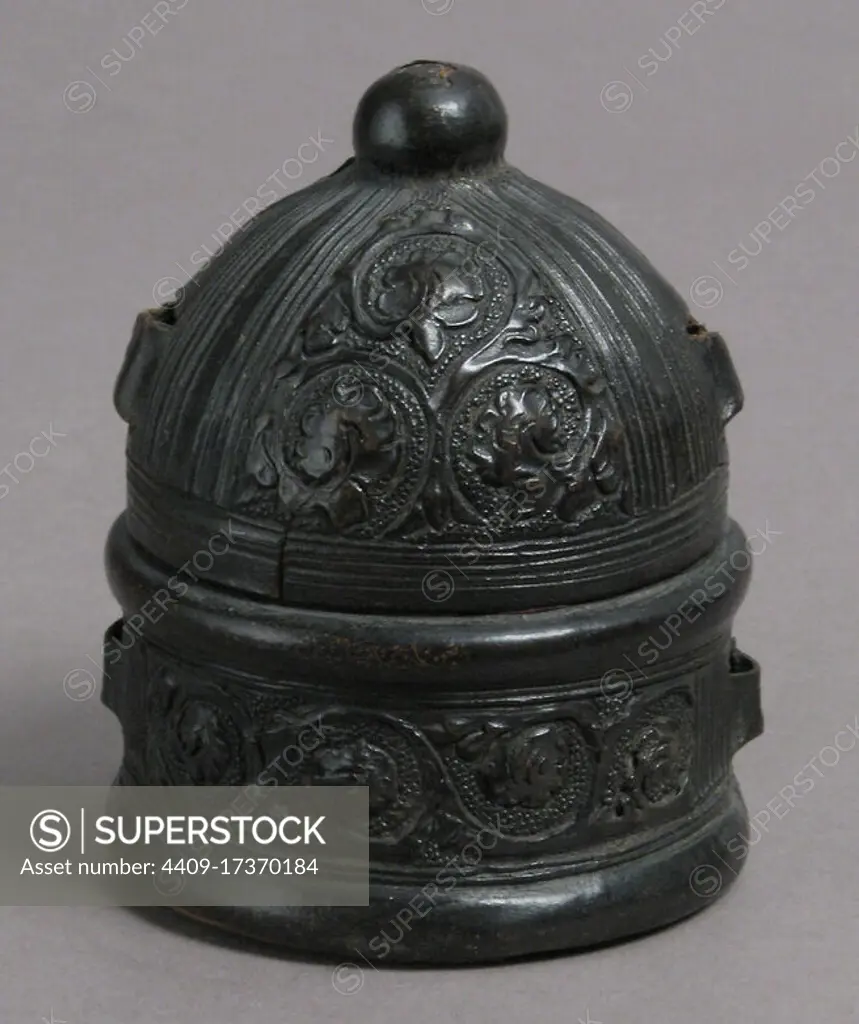
SuperStock offers millions of photos, videos, and stock assets to creatives around the world. This image of Box. Culture: Italian. Dimensions: Overall: 3 9/16 x 2 7/8 x 2 3/4 in. (9 x 7.3 x 7 cm). Date: 15th century.Ink containers of different shapes and sizes frequently appear in manuscript illuminations and in paintings depicting scribes or scholars in their studies. Although it is difficult to determine their material from the pictorial evidence, ink containers are known to have been made not only of horn, but also of silver, tin, and leather, and, in later periods, of glass and stoneware. Horn was used early in the Middle Ages; a twelfth-century manuscript shows two containers made of ox horns set in holes in the scribe's desk. By the fifteenth century, however, ink pots were designed as free-standing containers. Twelfth-century recipes for ink indicate that pigments, made of lampblack, gallnut, and similar materials, were stored in powder form and mixed with liquid in small amounts according to the scribes' immediate requirements. This practice, which continued throughout the Middle A by Album/Metropolitan Museum of Art, NY/Album Archivo is available for licensing today.
Looking for a license?
Click here, and we'll help you find it! Questions? Just ask!
Click here, and we'll help you find it! Questions? Just ask!
DETAILS
Image Number: 4409-17370184Rights ManagedCredit Line:Album/Metropolitan Museum of Art, NY/Album Archivo/SuperStockCollection:Album Archivo Contributor:Album / Metropolitan Museum of Art, NY Model Release:NoProperty Release:NoResolution:2268×2701