Bowl with wheel-cut facets. Culture: Sasanian. Dimensions: H. 7.9 cm. Date: ca. 6th-7th century A.D..This hemispherical bowl may have been made by blowing molten glass into an open mold (though possibly it was free-blown); subsequently, four rows of oblong-to-round facets were wheel-cut and polished. The thick glass, originally pale green, has lost much of its surface color and gained extensive iridescence through weathering.Faceted bowls such as this one are characterized by uniformity of shape, size, and arrangement of the facets in four or five rows. They represent the most widespread type of late Sasanian glass vessel, found in excavations of Mesopotamian and Iranian sites dating from the fifth to seventh century A.D. Some examples--probably carried along the Silk Road to the Far East by Persian merchants and traveling embassies--have been found in Japanese contexts, namely in the sixth-century tomb of the emperor Ankan and in the Shoso-in Treasure at Nara, which was assembled by
This asset has restrictions and cannot be purchased online. Get in touch for more details.
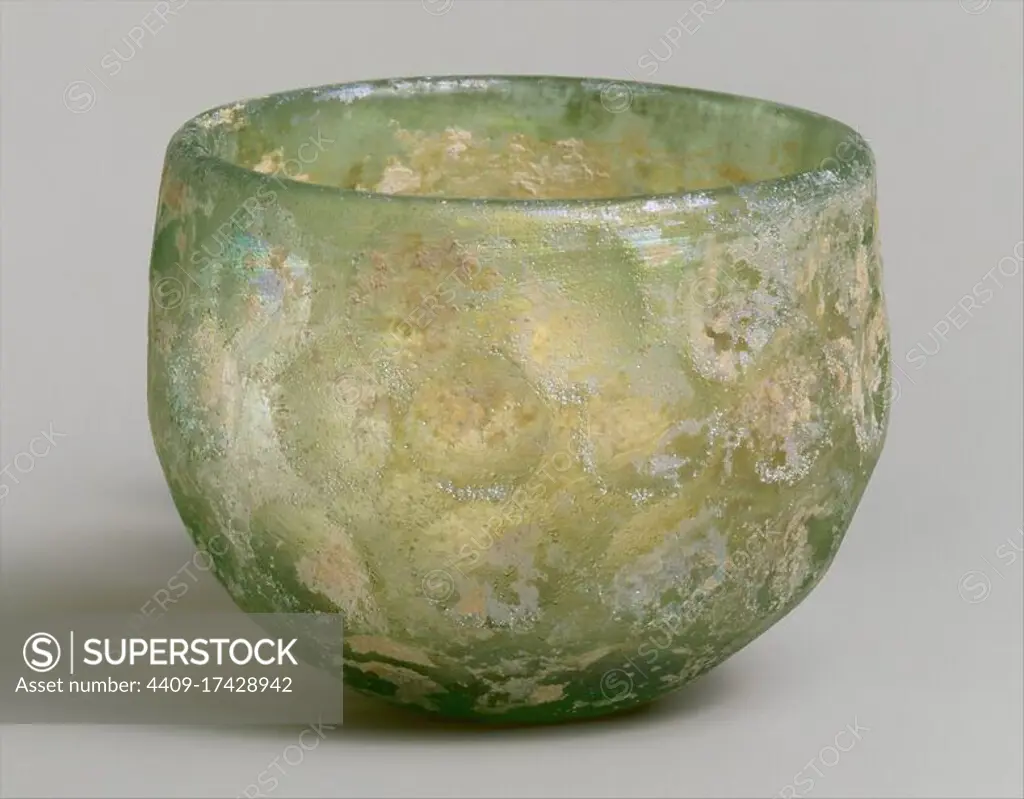
SuperStock offers millions of photos, videos, and stock assets to creatives around the world. This image of Bowl with wheel-cut facets. Culture: Sasanian. Dimensions: H. 7.9 cm. Date: ca. 6th-7th century A.D..This hemispherical bowl may have been made by blowing molten glass into an open mold (though possibly it was free-blown); subsequently, four rows of oblong-to-round facets were wheel-cut and polished. The thick glass, originally pale green, has lost much of its surface color and gained extensive iridescence through weathering.Faceted bowls such as this one are characterized by uniformity of shape, size, and arrangement of the facets in four or five rows. They represent the most widespread type of late Sasanian glass vessel, found in excavations of Mesopotamian and Iranian sites dating from the fifth to seventh century A.D. Some examples--probably carried along the Silk Road to the Far East by Persian merchants and traveling embassies--have been found in Japanese contexts, namely in the sixth-century tomb of the emperor Ankan and in the Shoso-in Treasure at Nara, which was assembled by by Album/Metropolitan Museum of Art, NY/Album Archivo is available for licensing today.
Looking for a license?
Click here, and we'll help you find it! Questions? Just ask!
Click here, and we'll help you find it! Questions? Just ask!
DETAILS
Image Number: 4409-17428942Rights ManagedCredit Line:Album/Metropolitan Museum of Art, NY/Album Archivo/SuperStockCollection:Album Archivo Contributor:Album / Metropolitan Museum of Art, NY Model Release:NoProperty Release:NoResolution:4192×3276