Bowl with a radiating petal design ca. 8th-6th century B.C. Phrygian or Lydian The Phrygians ruled in Central Anatolia, from about 800 to 700 B.C., from their capital at Gordion. King Midas, known in myth to have turned all he touched to gold, may have been the person buried in the great tumulus at Gordion. That tomb contained many drinking bowls made of brass (which in antiquity would have had a bright golden color) with a raised knob in the center allowing it to be held comfortably from underneath.This silver bowl, with a fine petal design with graceful stems radiating from a central raised knob, is a variation on many of the drinking bowls from the Gordion excavations. Thus, there is a possibility that this vessel was made by the Phrygians. But the Lydians, who ruled in western Anatolia from 685 to 547 B.C., admired objects of Phrygian manufacture, and this silver vessel may have in fact been made by the Lydians.. Bowl with a radiating petal design 325835
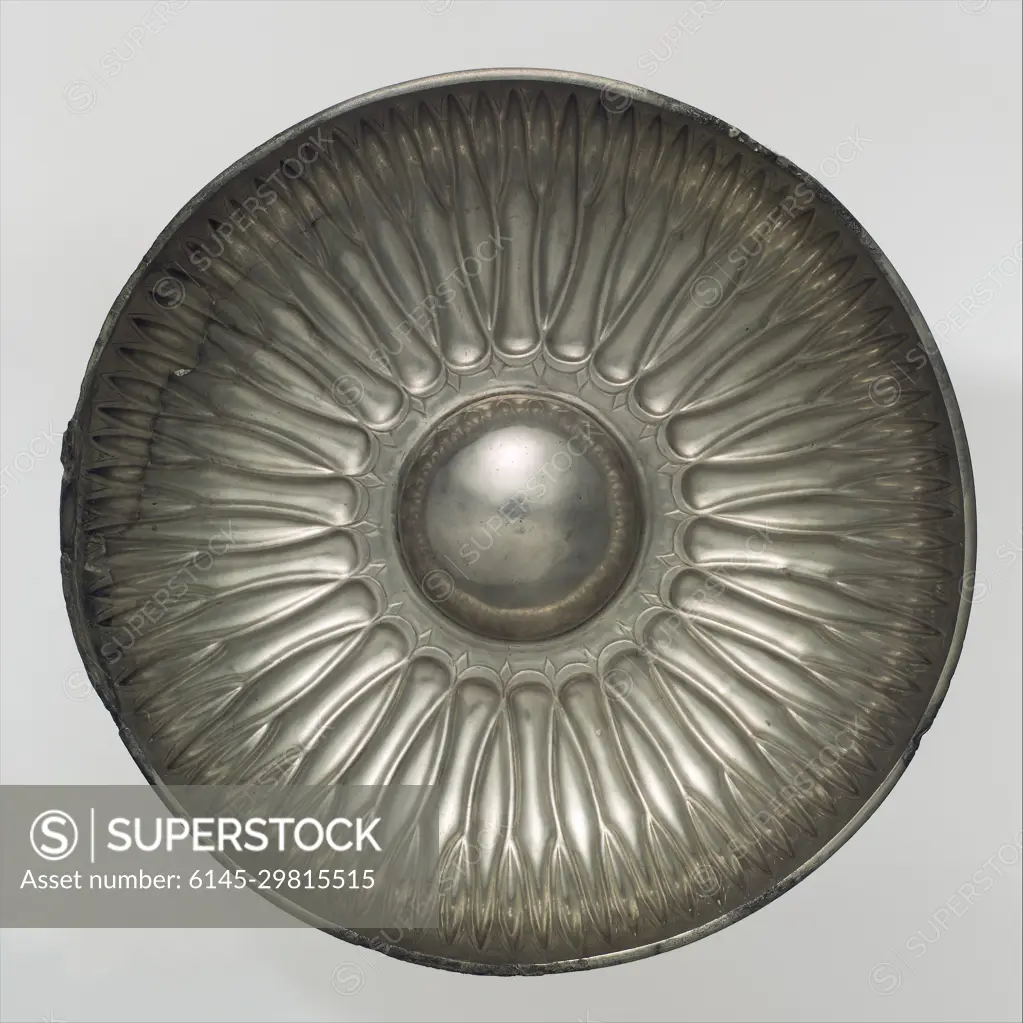
SuperStock offers millions of photos, videos, and stock assets to creatives around the world. This image of Bowl with a radiating petal design ca. 8th-6th century B.C. Phrygian or Lydian The Phrygians ruled in Central Anatolia, from about 800 to 700 B.C., from their capital at Gordion. King Midas, known in myth to have turned all he touched to gold, may have been the person buried in the great tumulus at Gordion. That tomb contained many drinking bowls made of brass (which in antiquity would have had a bright golden color) with a raised knob in the center allowing it to be held comfortably from underneath.This silver bowl, with a fine petal design with graceful stems radiating from a central raised knob, is a variation on many of the drinking bowls from the Gordion excavations. Thus, there is a possibility that this vessel was made by the Phrygians. But the Lydians, who ruled in western Anatolia from 685 to 547 B.C., admired objects of Phrygian manufacture, and this silver vessel may have in fact been made by the Lydians.. Bowl with a radiating petal design 325835 by Piemags/PL Photography Limited is available for licensing today.
Looking for a license?
Click here, and we'll help you find it! Questions? Just ask!
Click here, and we'll help you find it! Questions? Just ask!
DETAILS
Image Number: 6145-29815515Royalty FreeCredit Line:Piemags/PL Photography Limited/SuperStockCollection:PL Photography Limited Contributor:Piemags Model Release:NoProperty Release:NoResolution:3743×3742