Bowl with Human Feet. Dimensions: diam. 13.2 x W. 13.7 x D. 9.8 cm (5 3/16 x 5 3/8 x 3 7/8 in.). Date: ca. 3900-3650 B.C..In the Predynastic Period, potters created a wide variety of ceramic vessels. One unusual type is a bowl with supports shaped like human feet. This simple, round bowl, tipped slightly forward as if to offer its contents, has two such feet solidly attached to its underside. Made from Nile clay, the bowl has a smoothed, slipped, and polished surface, giving it a light sheen. The bowl standing on feet is very similar in form to the Egyptian hieroglyph meaning "to bring." Since none of the known bowls of this type comes from a well-understood context, archaeologists cannot interpret their original use. Perhaps vessels like this were placed above a tomb to present offerings from the living to the deceased, a practice that was an established part of funerary ritual in pharaonic Egypt. Alternatively, they may have held offerings to a deity in his shrine. Museum: Metropoli
This asset has restrictions and cannot be purchased online. Get in touch for more details.
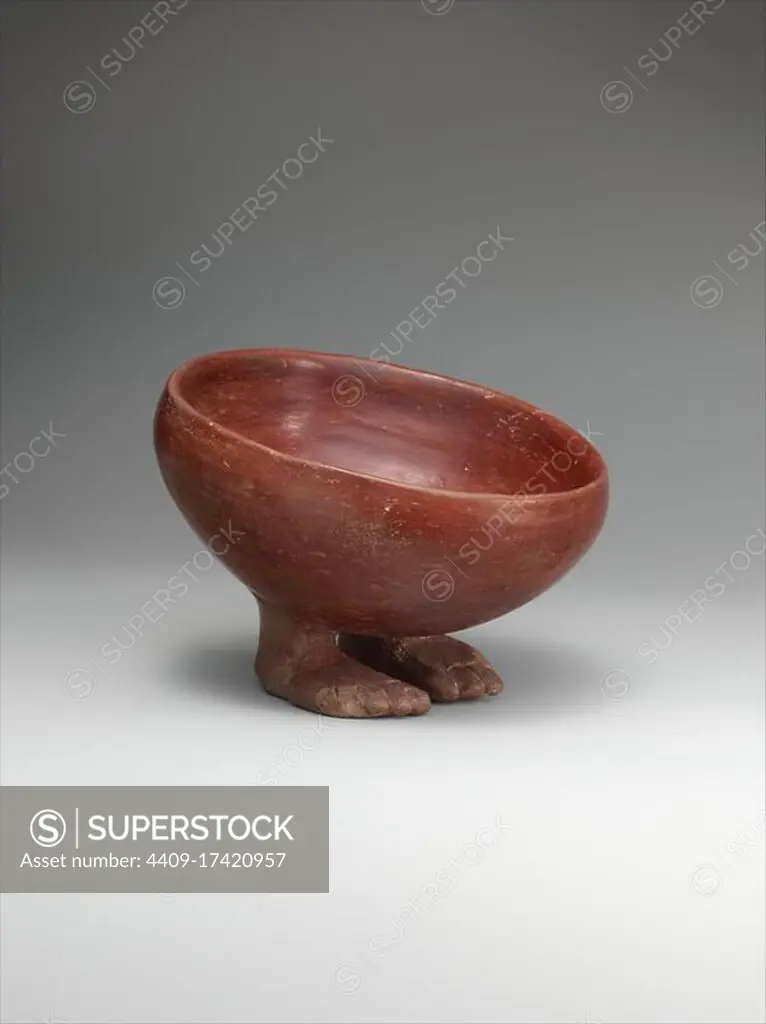
SuperStock offers millions of photos, videos, and stock assets to creatives around the world. This image of Bowl with Human Feet. Dimensions: diam. 13.2 x W. 13.7 x D. 9.8 cm (5 3/16 x 5 3/8 x 3 7/8 in.). Date: ca. 3900-3650 B.C..In the Predynastic Period, potters created a wide variety of ceramic vessels. One unusual type is a bowl with supports shaped like human feet. This simple, round bowl, tipped slightly forward as if to offer its contents, has two such feet solidly attached to its underside. Made from Nile clay, the bowl has a smoothed, slipped, and polished surface, giving it a light sheen. The bowl standing on feet is very similar in form to the Egyptian hieroglyph meaning "to bring." Since none of the known bowls of this type comes from a well-understood context, archaeologists cannot interpret their original use. Perhaps vessels like this were placed above a tomb to present offerings from the living to the deceased, a practice that was an established part of funerary ritual in pharaonic Egypt. Alternatively, they may have held offerings to a deity in his shrine. Museum: Metropoli by Album/Metropolitan Museum of Art, NY/Album Archivo is available for licensing today.
Looking for a license?
Click here, and we'll help you find it! Questions? Just ask!
Click here, and we'll help you find it! Questions? Just ask!
DETAILS
Image Number: 4409-17420957Rights ManagedCredit Line:Album/Metropolitan Museum of Art, NY/Album Archivo/SuperStockCollection:Album Archivo Contributor:Album / Metropolitan Museum of Art, NY Model Release:NoProperty Release:NoResolution:3186×4255