Bowl fragment with the head of a ram ca. early 2nd millennium B.C. Elamite This bowl fragment features the head of a stylized ram. The ram has a pointed snout, lentoid eyes with incised pupils, and horns with incised lines that form a heart shape around the rams face. The fragment is made of bitumen, an asphalt-like substance that occurs naturally in the Near East. Mixed with ground calcite and quartz it forms a hard, gray substance which can be shaped like clay.This fragment was excavated at Susa in southwestern Iran, the capital of the ancient Elamite kingdom. While bitumen was used elsewhere in the Near East, beginning in the third millennium BCE the Elamites developed an especially sophisticated recipe for bitumen compound, which they used to make a range of vessels, most decorated with animal foreparts, as well as other objects, a practice which continued into the first millennium BCE.. Bowl fragment with the head of a ram 323795
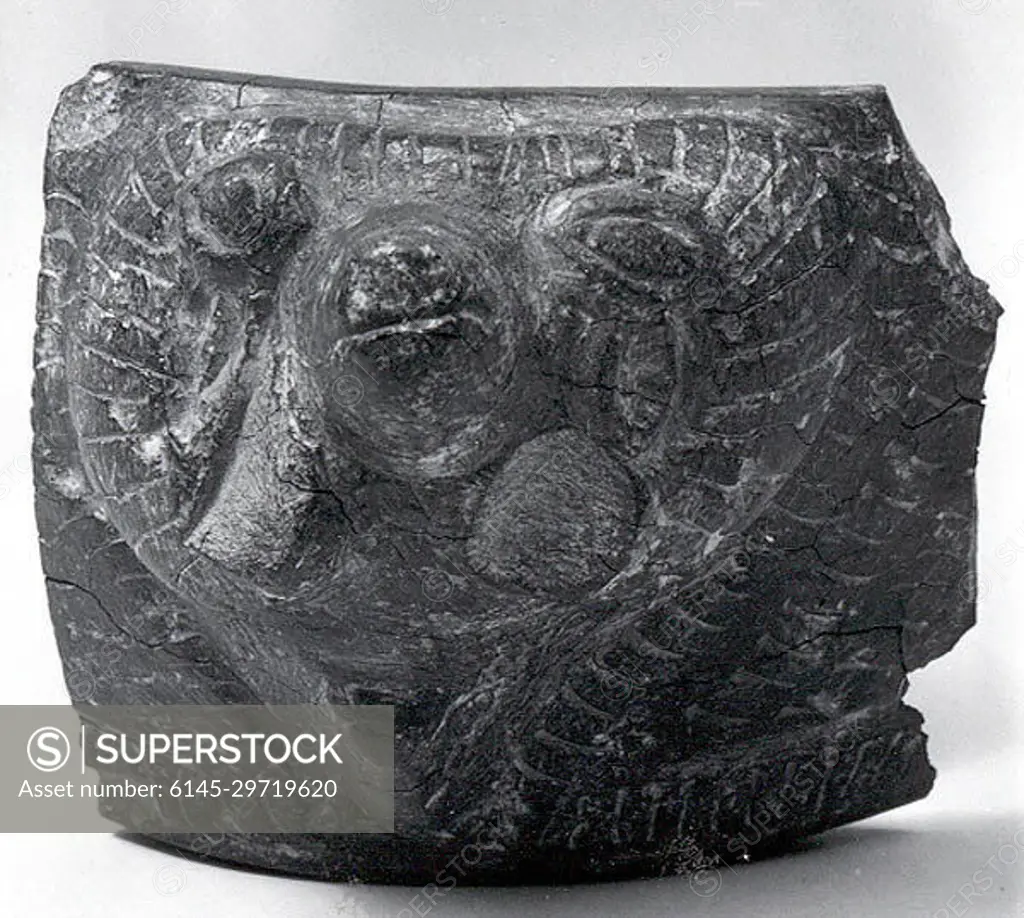
SuperStock offers millions of photos, videos, and stock assets to creatives around the world. This image of Bowl fragment with the head of a ram ca. early 2nd millennium B.C. Elamite This bowl fragment features the head of a stylized ram. The ram has a pointed snout, lentoid eyes with incised pupils, and horns with incised lines that form a heart shape around the rams face. The fragment is made of bitumen, an asphalt-like substance that occurs naturally in the Near East. Mixed with ground calcite and quartz it forms a hard, gray substance which can be shaped like clay.This fragment was excavated at Susa in southwestern Iran, the capital of the ancient Elamite kingdom. While bitumen was used elsewhere in the Near East, beginning in the third millennium BCE the Elamites developed an especially sophisticated recipe for bitumen compound, which they used to make a range of vessels, most decorated with animal foreparts, as well as other objects, a practice which continued into the first millennium BCE.. Bowl fragment with the head of a ram 323795 by Piemags/PL Photography Limited is available for licensing today.
Looking for a license?
Click here, and we'll help you find it! Questions? Just ask!
Click here, and we'll help you find it! Questions? Just ask!
DETAILS
Image Number: 6145-29719620Royalty FreeCredit Line:Piemags/PL Photography Limited/SuperStockCollection:PL Photography Limited Contributor:Piemags Model Release:NoProperty Release:NoResolution:600×538