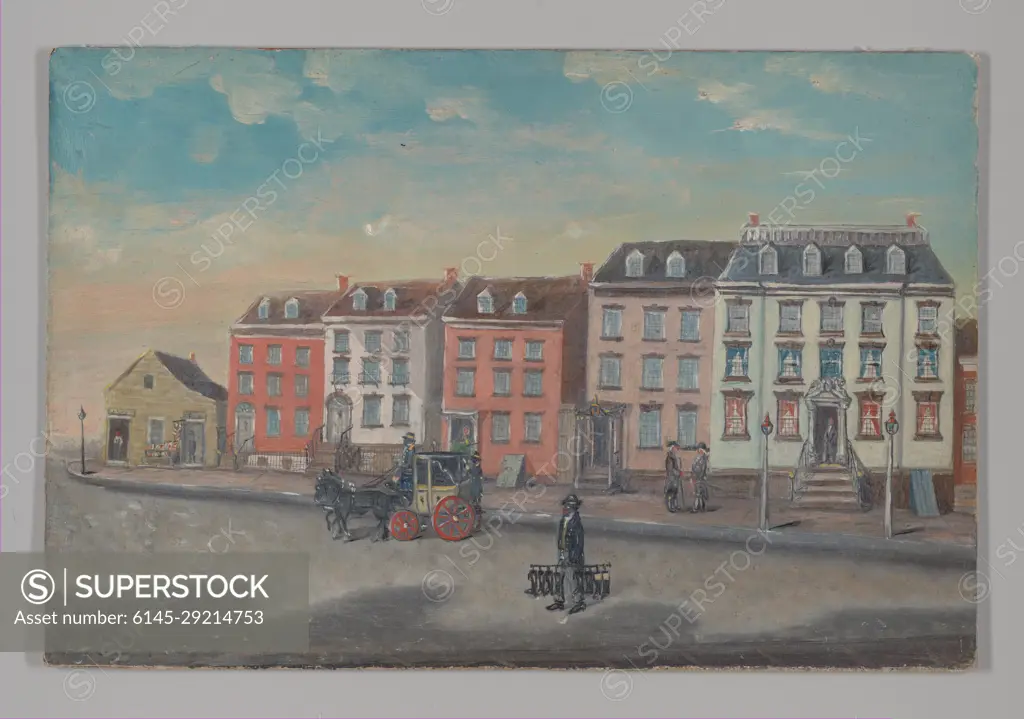
The Boot Black 1870s William P. Chappel American Here, Chappel captures two extremes of New York society. In the center are three black workersa boot black and two liveried coachmen. Whether they are free or enslaved is uncertain. This scene likely dates from 1806 to 1813, well before New York abolished slavery in 1827. If free, the men would have received meager wages. Chappel also depicts the Walton House, one of the city’s grandest homes, in great detail at far right. It was built in the 1750s by the merchant William Walton, who secured his family’s fortune by shipping provisions to the Spanish in St. Augustine, Florida.. The Boot Black. William P. Chappel (American, 1801-1878). American. 1870s. Oil on slate paper
SuperStock offers millions of photos, videos, and stock assets to creatives around the world. This image of The Boot Black 1870s William P. Chappel American Here, Chappel captures two extremes of New York society. In the center are three black workersa boot black and two liveried coachmen. Whether they are free or enslaved is uncertain. This scene likely dates from 1806 to 1813, well before New York abolished slavery in 1827. If free, the men would have received meager wages. Chappel also depicts the Walton House, one of the city’s grandest homes, in great detail at far right. It was built in the 1750s by the merchant William Walton, who secured his family’s fortune by shipping provisions to the Spanish in St. Augustine, Florida.. The Boot Black. William P. Chappel (American, 1801-1878). American. 1870s. Oil on slate paper by Piemags/PL Photography Limited is available for licensing today.
Looking for a license?
Click here, and we'll help you find it! Questions? Just ask!
Click here, and we'll help you find it! Questions? Just ask!
DETAILS
Image Number: 6145-29214753Royalty FreeCredit Line:Piemags/PL Photography Limited/SuperStockCollection:PL Photography Limited Contributor:Piemags Model Release:NoProperty Release:NoResolution:3545×2490