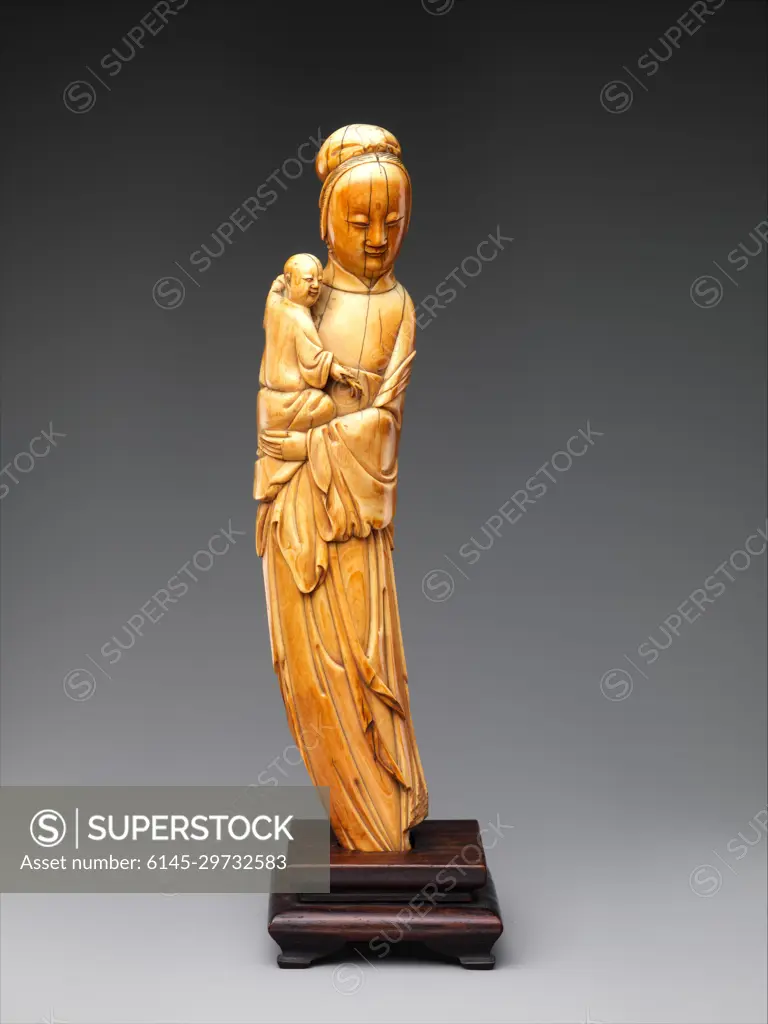
Bodhisatttva Guanyin 16th century China The child in the arms of the bodhisattva indicates that this ivory carving represents Guanyin as the Bestower of Sons. Although in India the Bodhisattva Avalokiteshvara was originally understood to be either genderless or male, in China, female manifestations developed and become popular, particularly for their ability to provide blessings such as children. This particular form was created during the Ming dynasty (1368-1644).. Bodhisatttva Guanyin. China. 16th century. Ivory. Ming dynasty (1368-1644). Ivories
SuperStock offers millions of photos, videos, and stock assets to creatives around the world. This image of Bodhisatttva Guanyin 16th century China The child in the arms of the bodhisattva indicates that this ivory carving represents Guanyin as the Bestower of Sons. Although in India the Bodhisattva Avalokiteshvara was originally understood to be either genderless or male, in China, female manifestations developed and become popular, particularly for their ability to provide blessings such as children. This particular form was created during the Ming dynasty (1368-1644).. Bodhisatttva Guanyin. China. 16th century. Ivory. Ming dynasty (1368-1644). Ivories by Piemags/PL Photography Limited is available for licensing today.
Looking for a license?
Click here, and we'll help you find it! Questions? Just ask!
Click here, and we'll help you find it! Questions? Just ask!
DETAILS
Image Number: 6145-29732583Royalty FreeCredit Line:Piemags/PL Photography Limited/SuperStockCollection:PL Photography Limited Contributor:Piemags Model Release:NoProperty Release:NoResolution:2911×3880