Blade for a Sword (Katana) dated June 1622 Inscribed Etch no kami Fujiwara Takahira Japanese Kanewaka was the most famous swordsmith of Kaga (now in Ishikawa Prefecture) during the Shinto (new sword) period, which spanned 200 years, from the late sixteenth to the late eighteenth century. Sometime between making a sword dated September 18, 1619, and his next recorded sword, dated January 1621, Kanewaka began signing his blades with the name Takahira and including two important titles granted him by the emperor. This is seen in the signature on the Museum's sword: Etch no kami Fujiwara no Takahira (Takahira, Honorary Governor of Etch, Honorary Member of the Fujiwara Family).In forging the surface texture of blades he signed Kanewaka, the swordsmith favored a mixture of two patterns: itame (wood grain) and masame (straight grain). His later blades signed Takahira, of which this is among the most beautiful, show a change to the koitame pattern, a small, finely patterned wood-grain effec
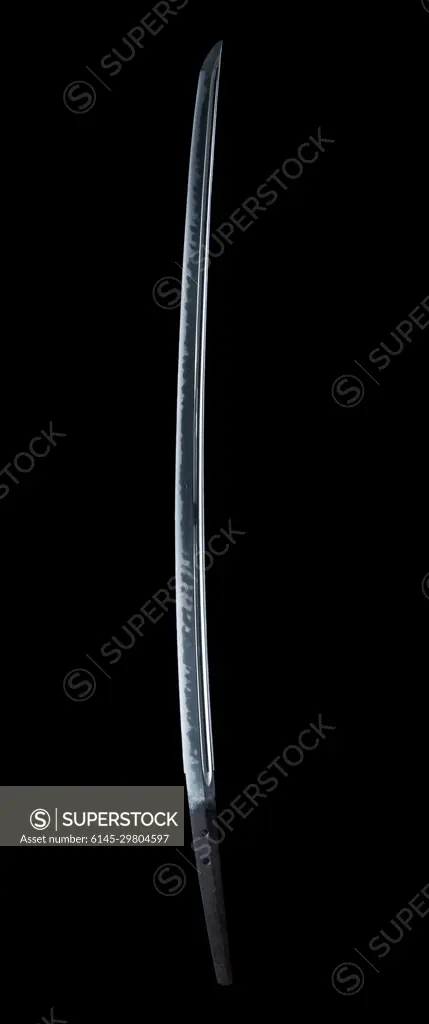
SuperStock offers millions of photos, videos, and stock assets to creatives around the world. This image of Blade for a Sword (Katana) dated June 1622 Inscribed Etch no kami Fujiwara Takahira Japanese Kanewaka was the most famous swordsmith of Kaga (now in Ishikawa Prefecture) during the Shinto (new sword) period, which spanned 200 years, from the late sixteenth to the late eighteenth century. Sometime between making a sword dated September 18, 1619, and his next recorded sword, dated January 1621, Kanewaka began signing his blades with the name Takahira and including two important titles granted him by the emperor. This is seen in the signature on the Museum's sword: Etch no kami Fujiwara no Takahira (Takahira, Honorary Governor of Etch, Honorary Member of the Fujiwara Family).In forging the surface texture of blades he signed Kanewaka, the swordsmith favored a mixture of two patterns: itame (wood grain) and masame (straight grain). His later blades signed Takahira, of which this is among the most beautiful, show a change to the koitame pattern, a small, finely patterned wood-grain effec by Piemags/PL Photography Limited is available for licensing today.
Looking for a license?
Click here, and we'll help you find it! Questions? Just ask!
Click here, and we'll help you find it! Questions? Just ask!
DETAILS
Image Number: 6145-29804597Royalty FreeCredit Line:Piemags/PL Photography Limited/SuperStockCollection:PL Photography Limited Contributor:Piemags Model Release:NoProperty Release:NoResolution:1677×4000