Berg's Ship Yard 1870s William P. Chappel American By the 1820s, New York City controlled more than thirty percent of the nations import trade. With the ports rise came the revitalization of the shipbuilding industry. Corlears Hook, where Christian Bergh established his business, was the center of the industry that stretched from Stanton to Catherine Streets along the East River. The surrounding neighborhood would have buzzed with the activity of hundreds of riggers, rope and sail makers, and joiners. The wooden-hulled ships, as Chappel depicts, were constructed waterside near workrooms and blacksmith shops. In 1806, a local paper noted the launch from Berghs yard of the 350-ton "Galloway" bound for the "India trade.". Berg's Ship Yard. William P. Chappel (American, 1801-1878). American. 1870s. Oil on slate paper
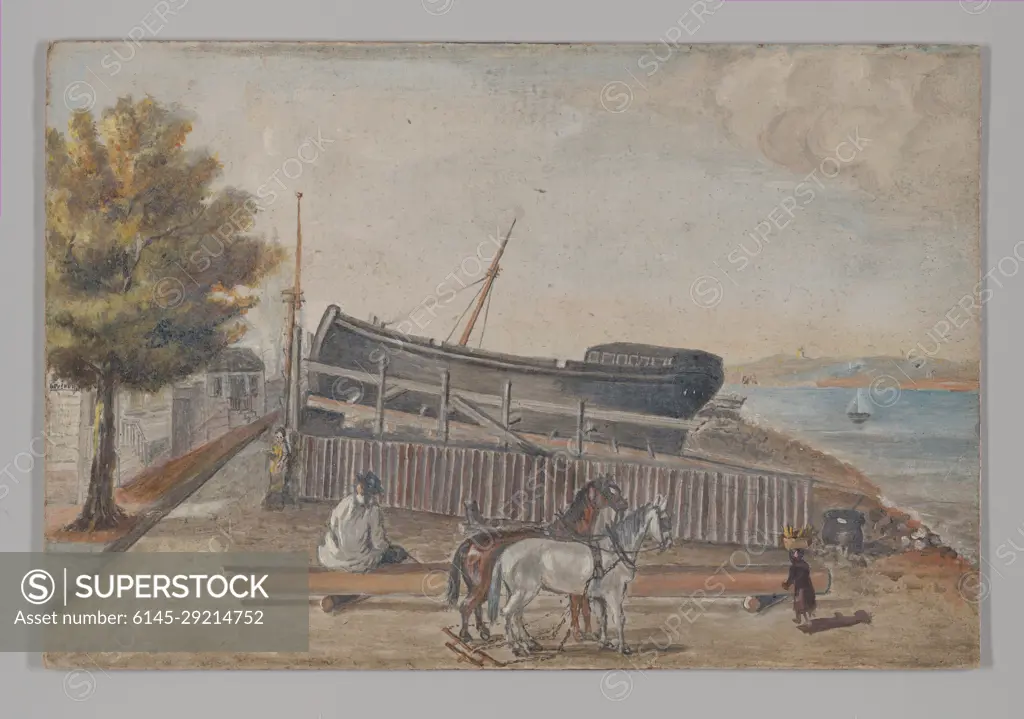
SuperStock offers millions of photos, videos, and stock assets to creatives around the world. This image of Berg's Ship Yard 1870s William P. Chappel American By the 1820s, New York City controlled more than thirty percent of the nations import trade. With the ports rise came the revitalization of the shipbuilding industry. Corlears Hook, where Christian Bergh established his business, was the center of the industry that stretched from Stanton to Catherine Streets along the East River. The surrounding neighborhood would have buzzed with the activity of hundreds of riggers, rope and sail makers, and joiners. The wooden-hulled ships, as Chappel depicts, were constructed waterside near workrooms and blacksmith shops. In 1806, a local paper noted the launch from Berghs yard of the 350-ton "Galloway" bound for the "India trade.". Berg's Ship Yard. William P. Chappel (American, 1801-1878). American. 1870s. Oil on slate paper by Piemags/PL Photography Limited is available for licensing today.
Looking for a license?
Click here, and we'll help you find it! Questions? Just ask!
Click here, and we'll help you find it! Questions? Just ask!
DETAILS
Image Number: 6145-29214752Royalty FreeCredit Line:Piemags/PL Photography Limited/SuperStockCollection:PL Photography Limited Contributor:Piemags Model Release:NoProperty Release:NoResolution:3518×2473