Beggar's Bowl (Kashkul) late 19th-early 20th century The kashkul, or beggars bowl, is perhaps the most emblematic accoutrement of the wandering dervish. These typically boat-shaped vessels were made from a variety of media, including coco-de-mer shell, wood, metal, and ceramic. Dervishes used them primarily to collect and store alms (their main source of sustenance) and occasionally as drinking vessels. In later centuries many were marketed as decorative objects. This example is made of coco-de-mer shell inlaid with camel bone and likely functioned as a beggar's bowl rather than a decorative object. The kashkul has a number of metaphorical associations. It represents the cleansing of a Sufis soul of all extraneous earthly desires in preparation for the acceptance of Divine love and a dervishs life of poverty.. Beggar's Bowl (Kashkul). late 19th-early 20th century. Coco-de-mer shell; inlaid with camel bone. Probably fro. Wood
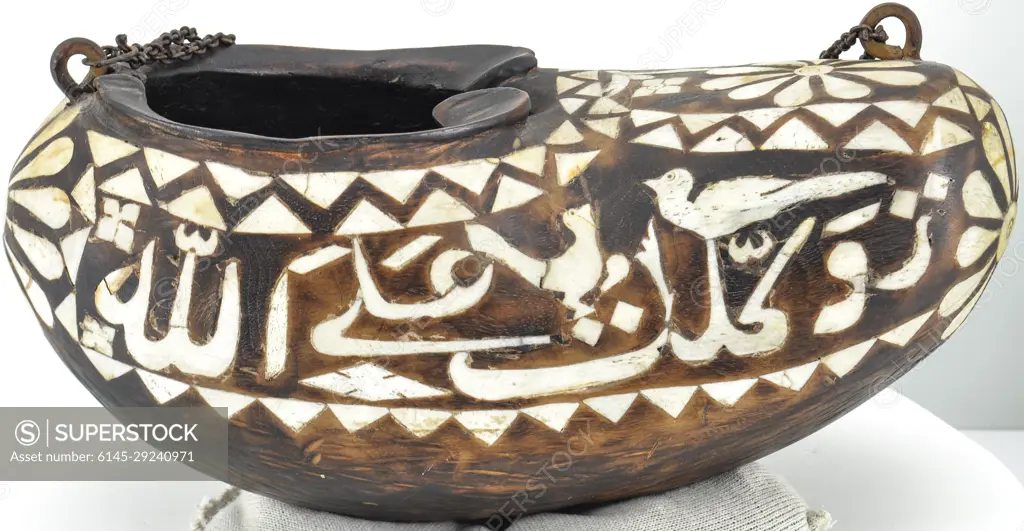
SuperStock offers millions of photos, videos, and stock assets to creatives around the world. This image of Beggar's Bowl (Kashkul) late 19th-early 20th century The kashkul, or beggars bowl, is perhaps the most emblematic accoutrement of the wandering dervish. These typically boat-shaped vessels were made from a variety of media, including coco-de-mer shell, wood, metal, and ceramic. Dervishes used them primarily to collect and store alms (their main source of sustenance) and occasionally as drinking vessels. In later centuries many were marketed as decorative objects. This example is made of coco-de-mer shell inlaid with camel bone and likely functioned as a beggar's bowl rather than a decorative object. The kashkul has a number of metaphorical associations. It represents the cleansing of a Sufis soul of all extraneous earthly desires in preparation for the acceptance of Divine love and a dervishs life of poverty.. Beggar's Bowl (Kashkul). late 19th-early 20th century. Coco-de-mer shell; inlaid with camel bone. Probably fro. Wood by Piemags/PL Photography Limited is available for licensing today.
Looking for a license?
Click here, and we'll help you find it! Questions? Just ask!
Click here, and we'll help you find it! Questions? Just ask!
DETAILS
Image Number: 6145-29240971Royalty FreeCredit Line:Piemags/PL Photography Limited/SuperStockCollection:PL Photography Limited Contributor:Piemags Model Release:NoProperty Release:NoResolution:3124×1623