Bead with cuneiform inscription of Kurigalzu I or II ca. 14th century B.C. Kassite Eye-like beads and stones, made from naturally occurring agate formations, are found throughout Mesopotamian history. At least by the end of the third millennium B.C., rulers began carving short inscriptions on these stones, dedicating them to the gods. Some eyestones, like this example, are drilled through the side with a hole allowing the beads to be strung, perhaps as part of jewelry. Whatever the use of these stones, as elements of jewelry or otherwise, it is clear that their eye-like appearance was an important and potent part of their meaning. The inscribed eyestones, some of which were dedicated for the life” of the individual, seem to evoke the desire to be looked upon with favor by the gods. The beneficent gaze of the gods was especially important to kings, who depended on divine favor for a successful and long-lasting reign. Indeed, of all the examples of inscribed eyestones known throughout M
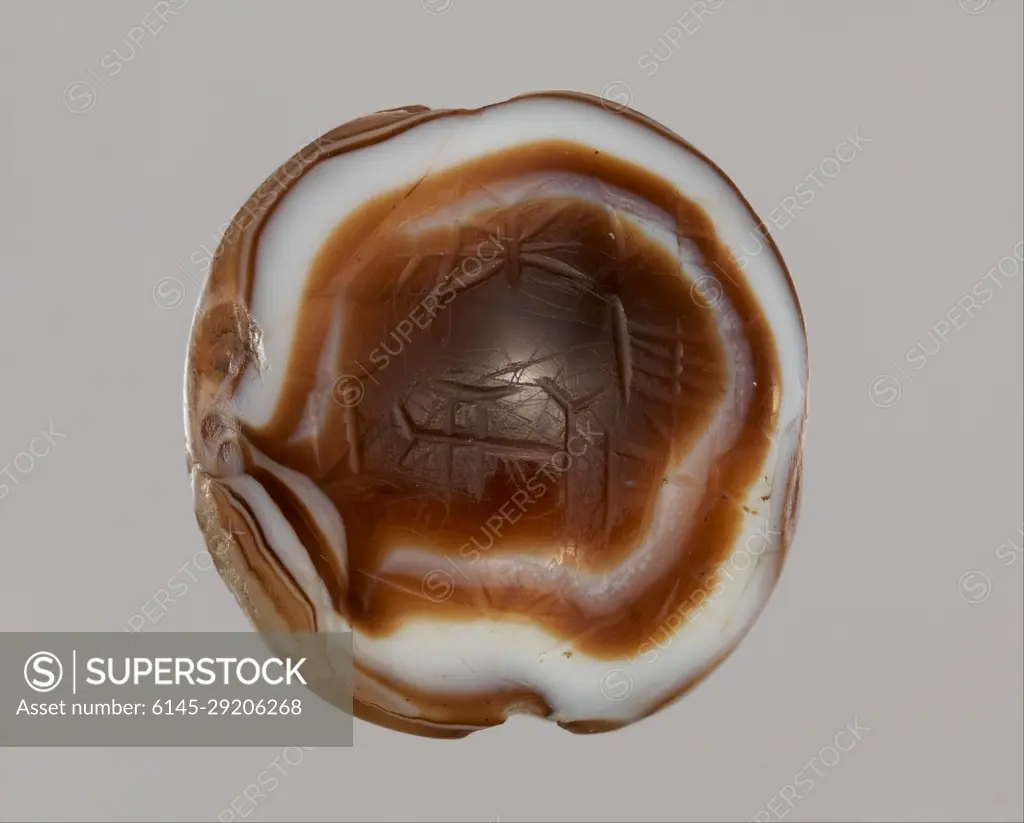
SuperStock offers millions of photos, videos, and stock assets to creatives around the world. This image of Bead with cuneiform inscription of Kurigalzu I or II ca. 14th century B.C. Kassite Eye-like beads and stones, made from naturally occurring agate formations, are found throughout Mesopotamian history. At least by the end of the third millennium B.C., rulers began carving short inscriptions on these stones, dedicating them to the gods. Some eyestones, like this example, are drilled through the side with a hole allowing the beads to be strung, perhaps as part of jewelry. Whatever the use of these stones, as elements of jewelry or otherwise, it is clear that their eye-like appearance was an important and potent part of their meaning. The inscribed eyestones, some of which were dedicated for the life” of the individual, seem to evoke the desire to be looked upon with favor by the gods. The beneficent gaze of the gods was especially important to kings, who depended on divine favor for a successful and long-lasting reign. Indeed, of all the examples of inscribed eyestones known throughout M by Piemags/PL Photography Limited is available for licensing today.
Looking for a license?
Click here, and we'll help you find it! Questions? Just ask!
Click here, and we'll help you find it! Questions? Just ask!
DETAILS
Image Number: 6145-29206268Royalty FreeCredit Line:Piemags/PL Photography Limited/SuperStockCollection:PL Photography Limited Contributor:Piemags Model Release:NoProperty Release:NoResolution:3867×3108