Bead ca. 3rd century B.C.-3rd century A.D. Parthian () This is a biconical bronze bead, which has been pierced for suspension. It was discovered on the surface at Shahr-i Qumis in northern Iran, which has been identified as the ancient city of Hecatompylos, established by the Parthians as their capital by about 200 B.C. In Greek Hecatompylos means ‘a hundred gates,’ suggesting that the city was quite large. Indeed, the modern archaeological site includes several mounds, only a few of which have been excavated, and a vast area covered with potsherds. Many other beads have been found at the site, made of such materials as carnelian, glass and faience.The excavations at Shahr-i Qumis by the British Institute of Persian Studies in 1967 were co-sponsored by the Metropolitan Museum of Art. However, the museum did not acquire this bead until 1978, as a result of the Met’s financial contributions to the Institute’s excavations at Tepe Nush-i Jan, another site in Iran. At the time the Iranian
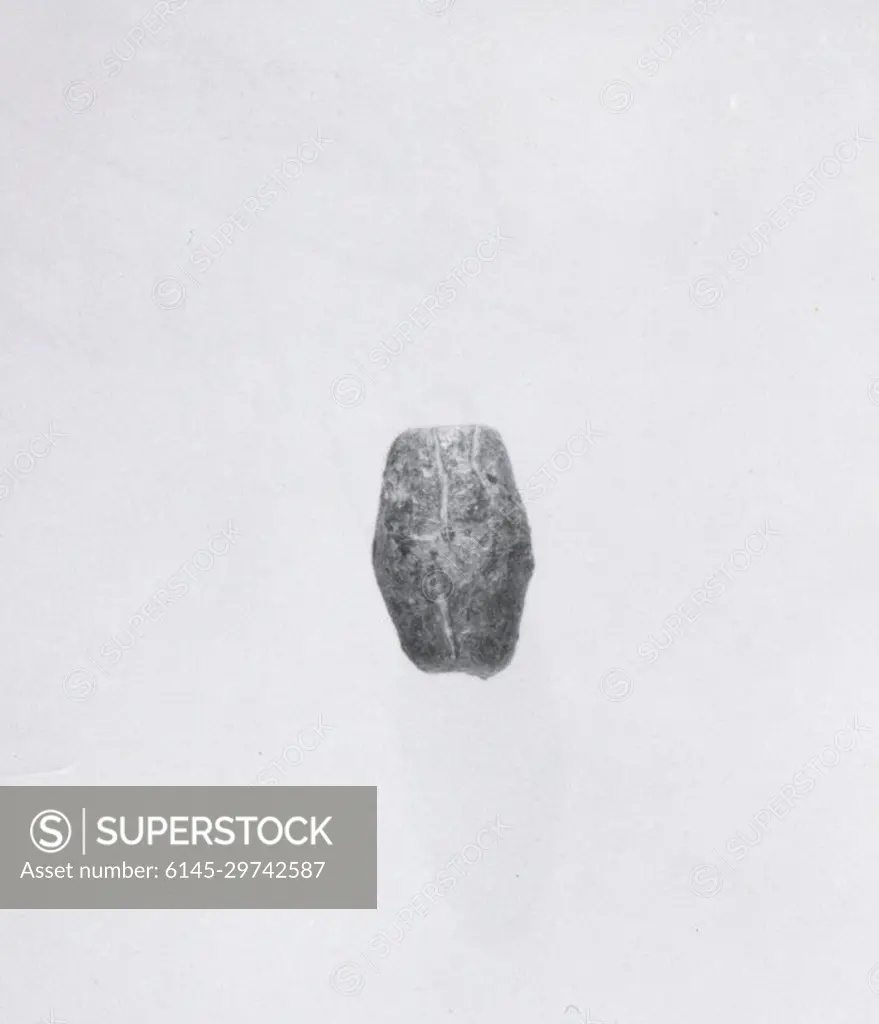
SuperStock offers millions of photos, videos, and stock assets to creatives around the world. This image of Bead ca. 3rd century B.C.-3rd century A.D. Parthian () This is a biconical bronze bead, which has been pierced for suspension. It was discovered on the surface at Shahr-i Qumis in northern Iran, which has been identified as the ancient city of Hecatompylos, established by the Parthians as their capital by about 200 B.C. In Greek Hecatompylos means ‘a hundred gates,’ suggesting that the city was quite large. Indeed, the modern archaeological site includes several mounds, only a few of which have been excavated, and a vast area covered with potsherds. Many other beads have been found at the site, made of such materials as carnelian, glass and faience.The excavations at Shahr-i Qumis by the British Institute of Persian Studies in 1967 were co-sponsored by the Metropolitan Museum of Art. However, the museum did not acquire this bead until 1978, as a result of the Met’s financial contributions to the Institute’s excavations at Tepe Nush-i Jan, another site in Iran. At the time the Iranian by Piemags/PL Photography Limited is available for licensing today.
Looking for a license?
Click here, and we'll help you find it! Questions? Just ask!
Click here, and we'll help you find it! Questions? Just ask!
DETAILS
Image Number: 6145-29742587Royalty FreeCredit Line:Piemags/PL Photography Limited/SuperStockCollection:PL Photography Limited Contributor:Piemags Model Release:NoProperty Release:NoResolution:700×815