Baritone shoulder horn in B-flat after 1875 Henry G. Lehnert German The unique and ingenious design of this instrument was patented in 1875, in anticipation of the American centennial. Its body takes the form of an oval, with the mouthpipe and mouthpiece extending inwards. The instrument is placed over the player's head and the main tubing rests on the shoulders, evenly distributing the weight of the horn between both sides of the body. The bell points forward in front of the performer. Players on the march appreciated the ergonomic design of these "Centennial model" basses and baritones. It is thought that Lehnert conceived of the instruments as a family and that tenor and alto models were also produced. A handful of other instruments made by Lehnert with a different configuration (alto and tenor valve trombones and an alto horn) were also marked with the centennial stamp but do not bear the patent specification and presumably did not take the oval shoulder horn form.. Baritone should
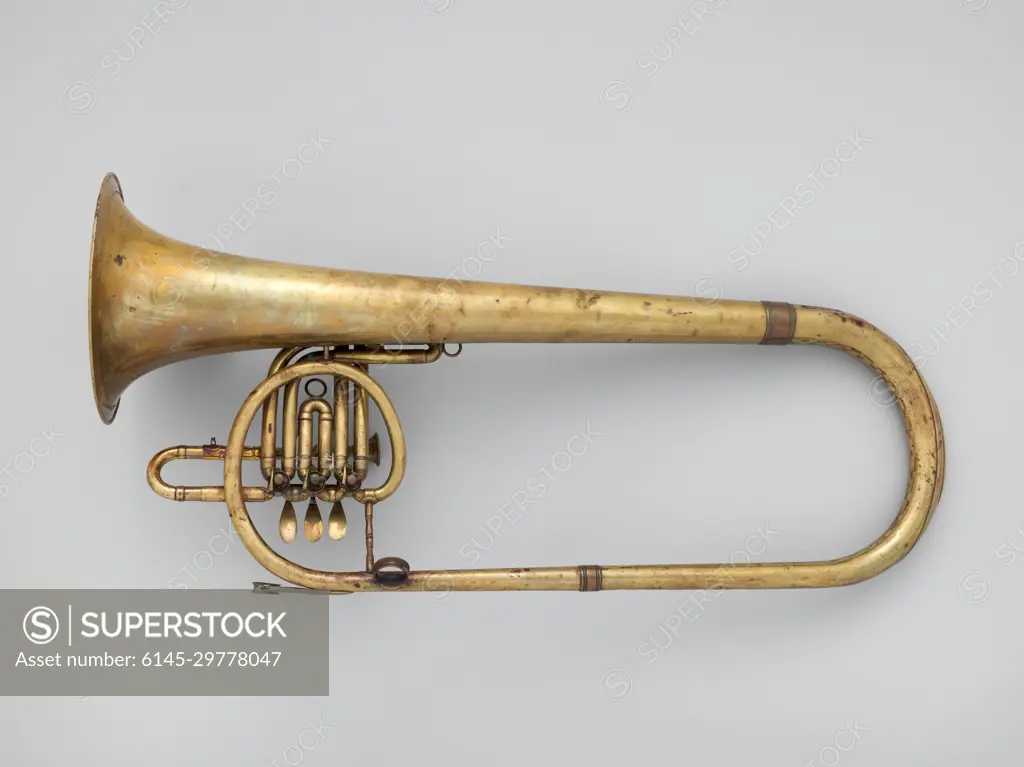
SuperStock offers millions of photos, videos, and stock assets to creatives around the world. This image of Baritone shoulder horn in B-flat after 1875 Henry G. Lehnert German The unique and ingenious design of this instrument was patented in 1875, in anticipation of the American centennial. Its body takes the form of an oval, with the mouthpipe and mouthpiece extending inwards. The instrument is placed over the player's head and the main tubing rests on the shoulders, evenly distributing the weight of the horn between both sides of the body. The bell points forward in front of the performer. Players on the march appreciated the ergonomic design of these "Centennial model" basses and baritones. It is thought that Lehnert conceived of the instruments as a family and that tenor and alto models were also produced. A handful of other instruments made by Lehnert with a different configuration (alto and tenor valve trombones and an alto horn) were also marked with the centennial stamp but do not bear the patent specification and presumably did not take the oval shoulder horn form.. Baritone should by Piemags/PL Photography Limited is available for licensing today.
Looking for a license?
Click here, and we'll help you find it! Questions? Just ask!
Click here, and we'll help you find it! Questions? Just ask!
DETAILS
Image Number: 6145-29778047Royalty FreeCredit Line:Piemags/PL Photography Limited/SuperStockCollection:PL Photography Limited Contributor:Piemags Model Release:NoProperty Release:NoResolution:4000×2998