Bacteriophage Phi-6, which serves as a model system for rotavirus, is the most common cause of diarrheal disease in infants and young children. An understanding of how bacteriophage assemble can help scientists develop new ways to treat rotavirus infections. Shown here is a cryo-electron microscopy image of the protein shell of Phi-6, or procapsid, opened to show the different protein types: P1 (blue), P4 (red), P7, yellow, and P2 (purple).
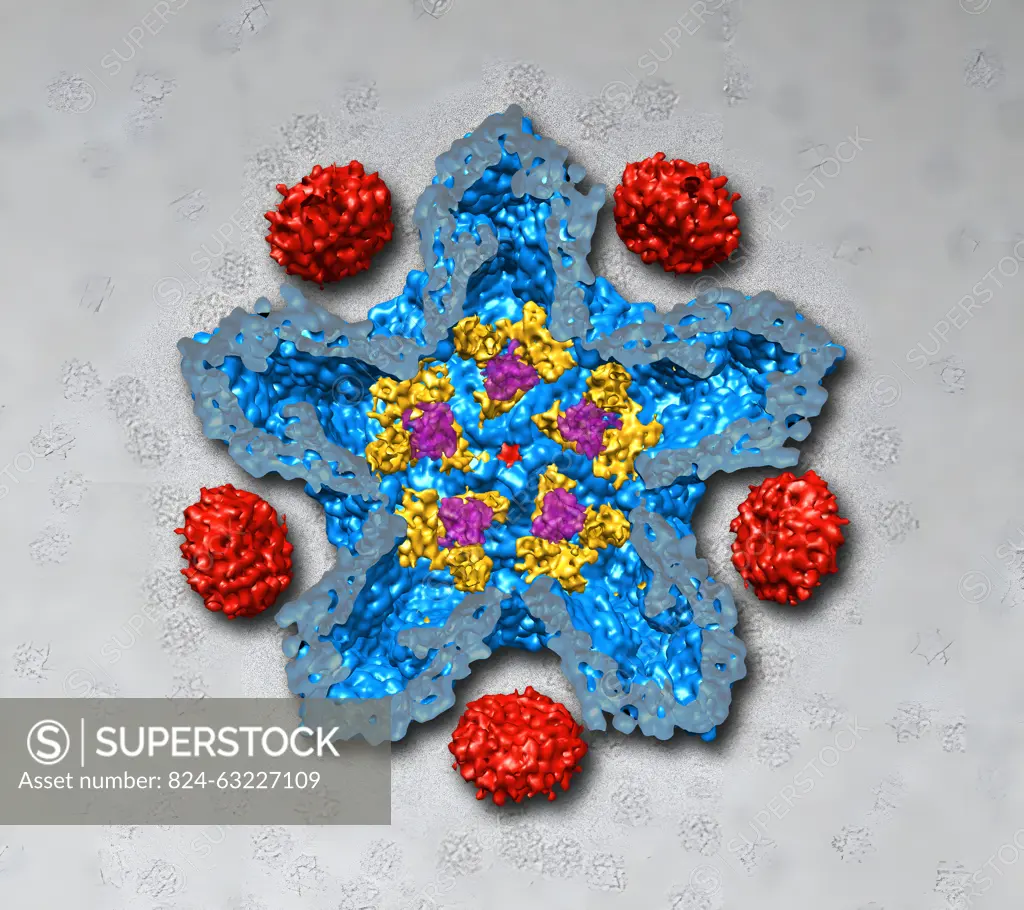
SuperStock offers millions of photos, videos, and stock assets to creatives around the world. This image of Bacteriophage Phi-6, which serves as a model system for rotavirus, is the most common cause of diarrheal disease in infants and young children. An understanding of how bacteriophage assemble can help scientists develop new ways to treat rotavirus infections. Shown here is a cryo-electron microscopy image of the protein shell of Phi-6, or procapsid, opened to show the different protein types: P1 (blue), P4 (red), P7, yellow, and P2 (purple). by NIH/IMAGE POINT FR/BSIP is available for licensing today.
Looking for a license?
Click here, and we'll help you find it! Questions? Just ask!
Click here, and we'll help you find it! Questions? Just ask!
DETAILS
Image Number: 824-63227109Rights ManagedCredit Line:NIH/IMAGE POINT FR/BSIP/SuperStockCollection:BSIP Contributor:NIH / IMAGE POINT FR / BSIP Model Release:NoProperty Release:NoResolution:4348×3866