Baboon with a wedjat eye 664-525 B.C. Late Period, Saite From the beginning of Egyptian history, the baboon had a role in Egyptian religion. Initially, he was known as a deity called the "Great White One" (that is, the moon), but soon this god was conflated with Thoth, the better known ibis-headed god of writing and recording. Thoth's responsibilities included the calendar, which in ancient Egypt was lunar based, facilitating the integration of the two deities. Baboon amulets probably were offerings to shrines honoring Thoth, but could also have been placed with the deceased as a representative of the deity who recorded Osiris' judgment. This baboon holds a wedjat eye, the eye stolen from Horus and healed by Thoth.. Baboon with a wedjat eye. 664-525 B.C.. Faience. Late Period, Saite. From Egypt. Dynasty 26
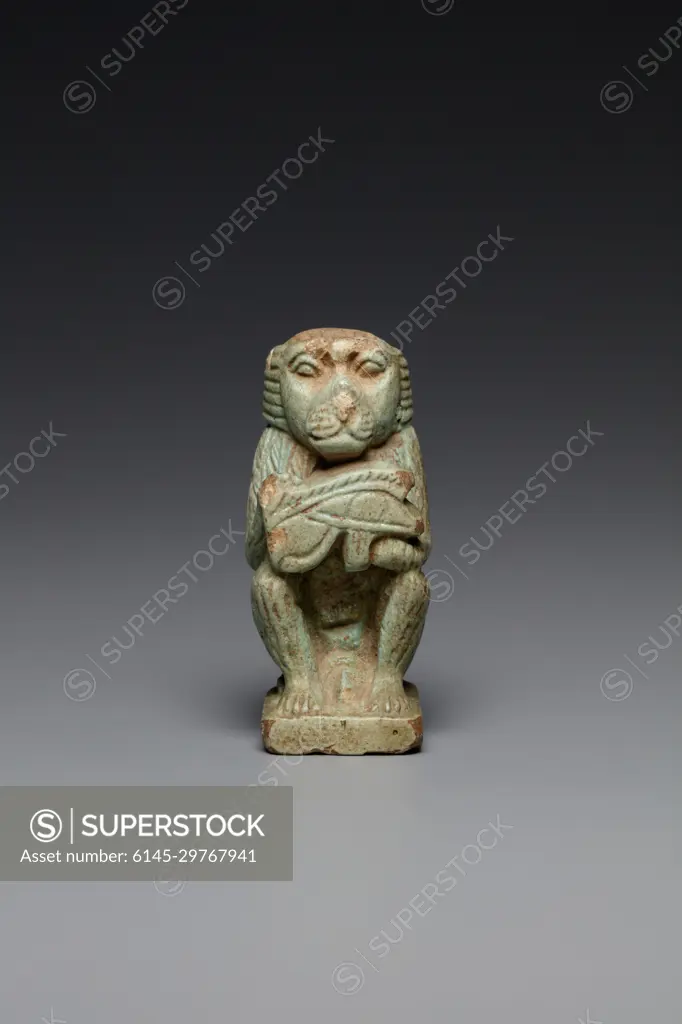
SuperStock offers millions of photos, videos, and stock assets to creatives around the world. This image of Baboon with a wedjat eye 664-525 B.C. Late Period, Saite From the beginning of Egyptian history, the baboon had a role in Egyptian religion. Initially, he was known as a deity called the "Great White One" (that is, the moon), but soon this god was conflated with Thoth, the better known ibis-headed god of writing and recording. Thoth's responsibilities included the calendar, which in ancient Egypt was lunar based, facilitating the integration of the two deities. Baboon amulets probably were offerings to shrines honoring Thoth, but could also have been placed with the deceased as a representative of the deity who recorded Osiris' judgment. This baboon holds a wedjat eye, the eye stolen from Horus and healed by Thoth.. Baboon with a wedjat eye. 664-525 B.C.. Faience. Late Period, Saite. From Egypt. Dynasty 26 by Piemags/PL Photography Limited is available for licensing today.
Looking for a license?
Click here, and we'll help you find it! Questions? Just ask!
Click here, and we'll help you find it! Questions? Just ask!
DETAILS
Image Number: 6145-29767941Royalty FreeCredit Line:Piemags/PL Photography Limited/SuperStockCollection:PL Photography Limited Contributor:Piemags Model Release:NoProperty Release:NoResolution:2667×4000