Automaton clock in the form of an eagle ca. 1630 German, Augsburg European clocks were often, and from the outset, associated with the creation of automatamoving, mechanized figures or contrivances. Seventeenth-century Augsburg clockmakers specialized in small domestic examples. Here, when the clock strikes the hour, the scepter moves, and on the quarter hours the eagle opens and shuts its beak and rolls its eyes. The eagle emblem of the Habsburgs had special meaning for inhabitants of Augsburg, a free city with a direct allegiance to the Habsburg Holy Roman emperors.. Automaton clock in the form of an eagle. German, Augsburg. ca. 1630. Case: gilded brass on base of ebony and ebony veneered on fruitwood; Movement: brass and iron. Horology
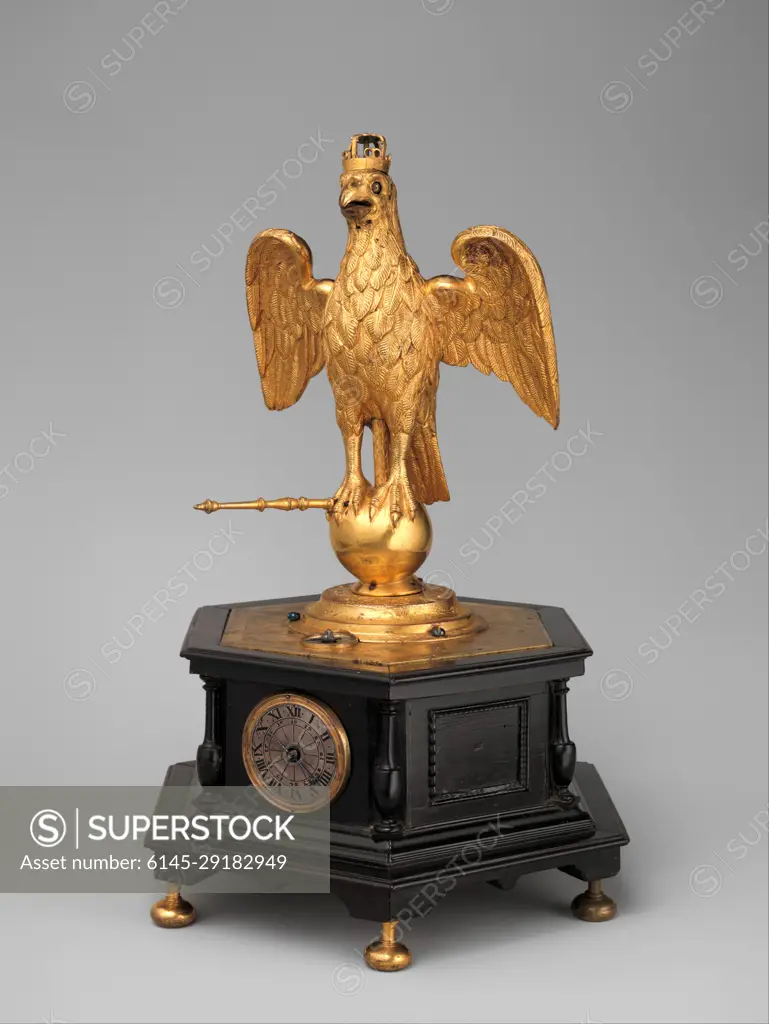
SuperStock offers millions of photos, videos, and stock assets to creatives around the world. This image of Automaton clock in the form of an eagle ca. 1630 German, Augsburg European clocks were often, and from the outset, associated with the creation of automatamoving, mechanized figures or contrivances. Seventeenth-century Augsburg clockmakers specialized in small domestic examples. Here, when the clock strikes the hour, the scepter moves, and on the quarter hours the eagle opens and shuts its beak and rolls its eyes. The eagle emblem of the Habsburgs had special meaning for inhabitants of Augsburg, a free city with a direct allegiance to the Habsburg Holy Roman emperors.. Automaton clock in the form of an eagle. German, Augsburg. ca. 1630. Case: gilded brass on base of ebony and ebony veneered on fruitwood; Movement: brass and iron. Horology by Piemags/PL Photography Limited is available for licensing today.
Looking for a license?
Click here, and we'll help you find it! Questions? Just ask!
Click here, and we'll help you find it! Questions? Just ask!
DETAILS
Image Number: 6145-29182949Royalty FreeCredit Line:Piemags/PL Photography Limited/SuperStockCollection:PL Photography Limited Contributor:Piemags Model Release:NoProperty Release:NoResolution:2925×3893