Astronomers using the Spitzer Space telescope have found a likely solution to a centuries-old riddle of the night sky. Every 27 years, a bright star called Epsilon Aurigae fades over a period of two years, then brightens back up again. Though amateur and professional astronomers have observed the system extensively, the nature of both the bright star and the companion object that periodically eclipses it have remained unclear. The companion is known to be surrounded by a dusty disk, as illustrat
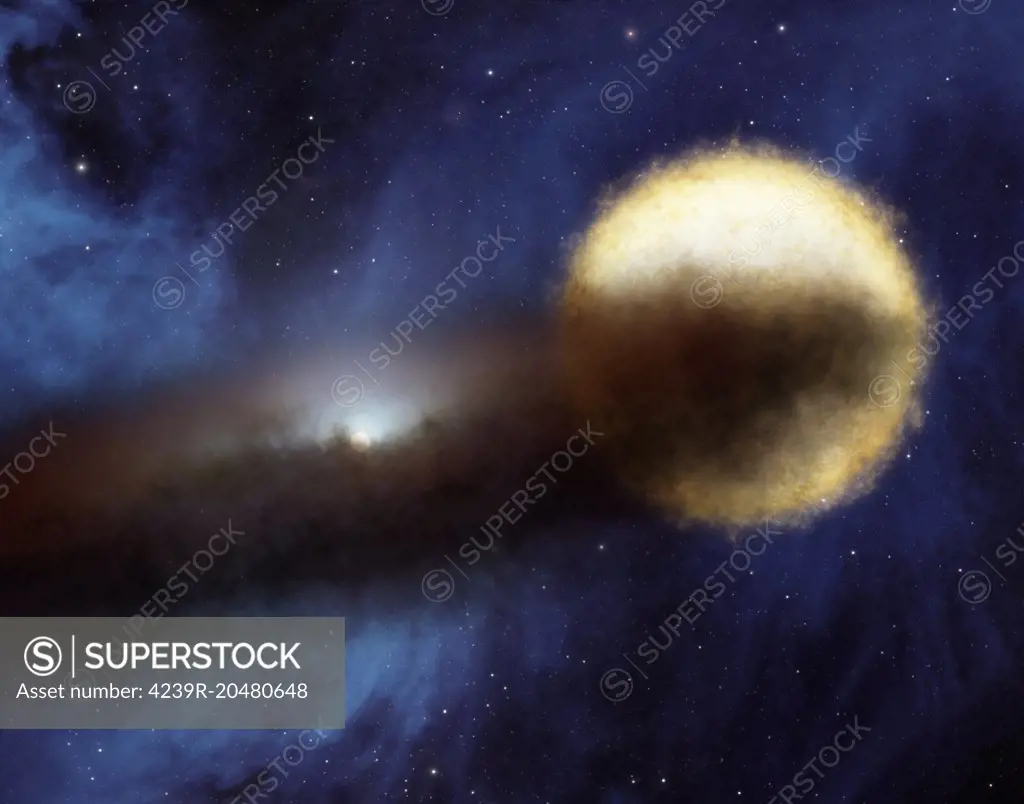
SuperStock offers millions of photos, videos, and stock assets to creatives around the world. This image of Astronomers using the Spitzer Space telescope have found a likely solution to a centuries-old riddle of the night sky. Every 27 years, a bright star called Epsilon Aurigae fades over a period of two years, then brightens back up again. Though amateur and professional astronomers have observed the system extensively, the nature of both the bright star and the companion object that periodically eclipses it have remained unclear. The companion is known to be surrounded by a dusty disk, as illustrat by Stocktrek Images/StockTrek is available for licensing today.
Looking for a license?
Click here, and we'll help you find it! Questions? Just ask!
Click here, and we'll help you find it! Questions? Just ask!
DETAILS
Image Number: 4239R-20480648Royalty FreeCredit Line:Stocktrek Images/StockTrek/SuperStockCollection:Stocktrek Images Contributor:Stocktrek Images Model Release:NoProperty Release:NoResolution:3601×2829