Apotropaic rod ca. 1878-1640 B.C. Middle Kingdom Composed of four joining segments, this so-called magic rod is the only completely preserved example of its type. Perhaps related to the four "birthing bricks" arranged for the protection of mother and child during delivery, the rod was used to ward off harmful spirits. Some of the protective motifsfeline predators, crocodiles, toads, a turtle, wedjat eyes, and baboons with flaming torcheswere also depicted on apotropaic wands and feeding cups, objects with the same defensive function. Listen to experts illuminate this artwork's story Listen Play or pause #1119. Magic rod with animals on top Supported by Bloomberg Philanthropies We're sorry, the transcript for this audio track is not available at this time. We are working to make it available as soon as possible.. Apotropaic rod. ca. 1878-1640 B.C.. Glazed steatite. Middle Kingdom. From Egypt. Dynasty 12
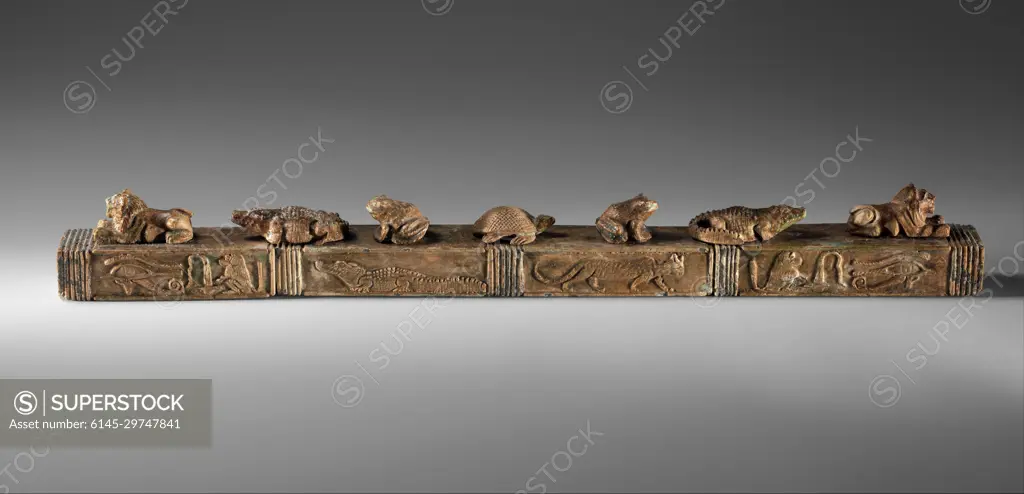
SuperStock offers millions of photos, videos, and stock assets to creatives around the world. This image of Apotropaic rod ca. 1878-1640 B.C. Middle Kingdom Composed of four joining segments, this so-called magic rod is the only completely preserved example of its type. Perhaps related to the four "birthing bricks" arranged for the protection of mother and child during delivery, the rod was used to ward off harmful spirits. Some of the protective motifsfeline predators, crocodiles, toads, a turtle, wedjat eyes, and baboons with flaming torcheswere also depicted on apotropaic wands and feeding cups, objects with the same defensive function. Listen to experts illuminate this artwork's story Listen Play or pause #1119. Magic rod with animals on top Supported by Bloomberg Philanthropies We're sorry, the transcript for this audio track is not available at this time. We are working to make it available as soon as possible.. Apotropaic rod. ca. 1878-1640 B.C.. Glazed steatite. Middle Kingdom. From Egypt. Dynasty 12 by Piemags/PL Photography Limited is available for licensing today.
Looking for a license?
Click here, and we'll help you find it! Questions? Just ask!
Click here, and we'll help you find it! Questions? Just ask!
DETAILS
Image Number: 6145-29747841Royalty FreeCredit Line:Piemags/PL Photography Limited/SuperStockCollection:PL Photography Limited Contributor:Piemags Model Release:NoProperty Release:NoResolution:3927×1895