Amitabha and Kshitigarba first half of the 14th century Unidentified artist The combination of the Amitabha Buddha (Korean: Amita) and the bodhisattva Kshitigarbha (Korean: Jijang)on the right and left, respectively, standing under a canopyis the only known example of this iconography in Goryeo Buddhist painting. A more typical composition features these two figures with the bodhisattva Avalokiteshvara (Korean: Gwaneum), forming a triad in which Amitabha is the central deity, or just the two bodhisattvas. Both deities in this painting enjoyed a strong following during the Goryeo dynasty due to the popularity of Pure Land Buddhism. Amitabha Buddha offered the promise of easy salvation and entry into the Western Paradise; Kshitigarbha provided guidance and redemption in death and the afterlife.Buddhist paintings of the Goryeo dynasty were renowned for their delicacy, refinement, and exquisitely rendered gold-painted designs. Pigments were applied to the front and back of the silk, inte
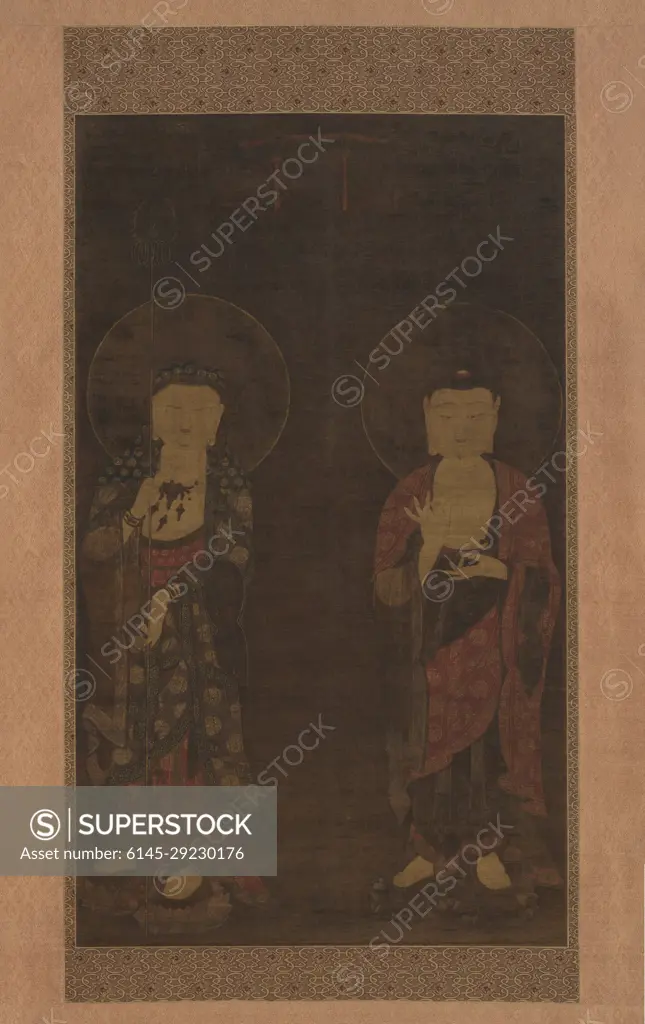
SuperStock offers millions of photos, videos, and stock assets to creatives around the world. This image of Amitabha and Kshitigarba first half of the 14th century Unidentified artist The combination of the Amitabha Buddha (Korean: Amita) and the bodhisattva Kshitigarbha (Korean: Jijang)on the right and left, respectively, standing under a canopyis the only known example of this iconography in Goryeo Buddhist painting. A more typical composition features these two figures with the bodhisattva Avalokiteshvara (Korean: Gwaneum), forming a triad in which Amitabha is the central deity, or just the two bodhisattvas. Both deities in this painting enjoyed a strong following during the Goryeo dynasty due to the popularity of Pure Land Buddhism. Amitabha Buddha offered the promise of easy salvation and entry into the Western Paradise; Kshitigarbha provided guidance and redemption in death and the afterlife.Buddhist paintings of the Goryeo dynasty were renowned for their delicacy, refinement, and exquisitely rendered gold-painted designs. Pigments were applied to the front and back of the silk, inte by Piemags/PL Photography Limited is available for licensing today.
Looking for a license?
Click here, and we'll help you find it! Questions? Just ask!
Click here, and we'll help you find it! Questions? Just ask!
DETAILS
Image Number: 6145-29230176Royalty FreeCredit Line:Piemags/PL Photography Limited/SuperStockCollection:PL Photography Limited Contributor:Piemags Model Release:NoProperty Release:NoResolution:2520×4000